
In the third instalment of the Ka huri te kei o te waka: Māori Agribusinesses Navigating Land Use and Enterprise Transition series, we look at Te Kautuku Trust, the kaitiaki of a climate-challenged East Coast beef station, diversifying its land use into biodiversity restoration and nature markets. Te Kautuku Trust is one of four Māori agribusinesses partnering with the Bioeconomy Science Institute Maiangi Taiao through its Land Use Transition programme, alongside Kānuka Charitable Trust, Mānuka Performance and Te Pū Oranga Whenua Collective.
Retaining and restoring the whenua
Māori landowners in Tairāwhiti have long navigated a range of challenges, including volatile agricultural markets, limited access to capital, rural depopulation, and increasingly severe weather events. The governors of Te Kautuku Trust know these pressures too well. After decades of economic and environmental uncertainty, they are now exploring new ways to retain and restore their whenua while sustaining an income for future generations.
Te Kautuku Trust is an Ahu Whenua Trust overseeing a 930-hectare Māori freehold land block in Rangitukia on the East Coast. The Trust is collectively owned by more than 300 shareholders, and for many years the main economic activity on its steep, erosion-prone land was sheep and beef farming. The block is managed by Rangi Raroa, who has served as land manager since the 1990s, carrying on a whānau legacy of land management passed down from his father.
Rangi’s daughter, Renee Raroa (Ngāti Porou), grew up at Te Kautuku and continues the intergenerational stewardship of the whenua. Renee is the founding director of the East Coast Exchange, an indigenous-led data cooperative supporting regeneration projects within the tribal boundaries of Ngāti Porou. The East Coast Exchange is also one of the partners in the Toha Network, a New Zealand-based ecosystem of impact investors, scientists and communities that uses digital infrastructure to fund and scale regenerative environmental action.
It is through Renee’s connections that Te Kautuku became a pilot in the Toha Network in 2024, with Air New Zealand and Te Puni Kōkiri as the pilot’s first co-investors. To support this mahi, Te Kautuku Trust joined the Land Use Transition programme of the Bioeconomy Science Institute Maiangi Taiao as a Māori research partner to help build their research capacity and capability.
Layering new scientific tools and data
Renee leads Te Kautuku's participation in the Land Use Transition programme, supporting the relationship between the Trust, whānau, researchers, and wider partners. The kaupapa Māori programme recognises that there is no single pathway for change, and that Māori agribusinesses are navigating different transition journeys.
Te Kautuku is part of the integrated transition pathway workstream, reducing reliance on conventional beef farming and towards diversified land uses including native restoration, biodiversity work, and emerging nature-based opportunities. Rather than replacing existing knowledge, the approach layers new scientific tools and data onto what the whānau and wider community already hold, including environmental and biodiversity data collection to inform more place-based decisions about how the whenua is managed into the future.
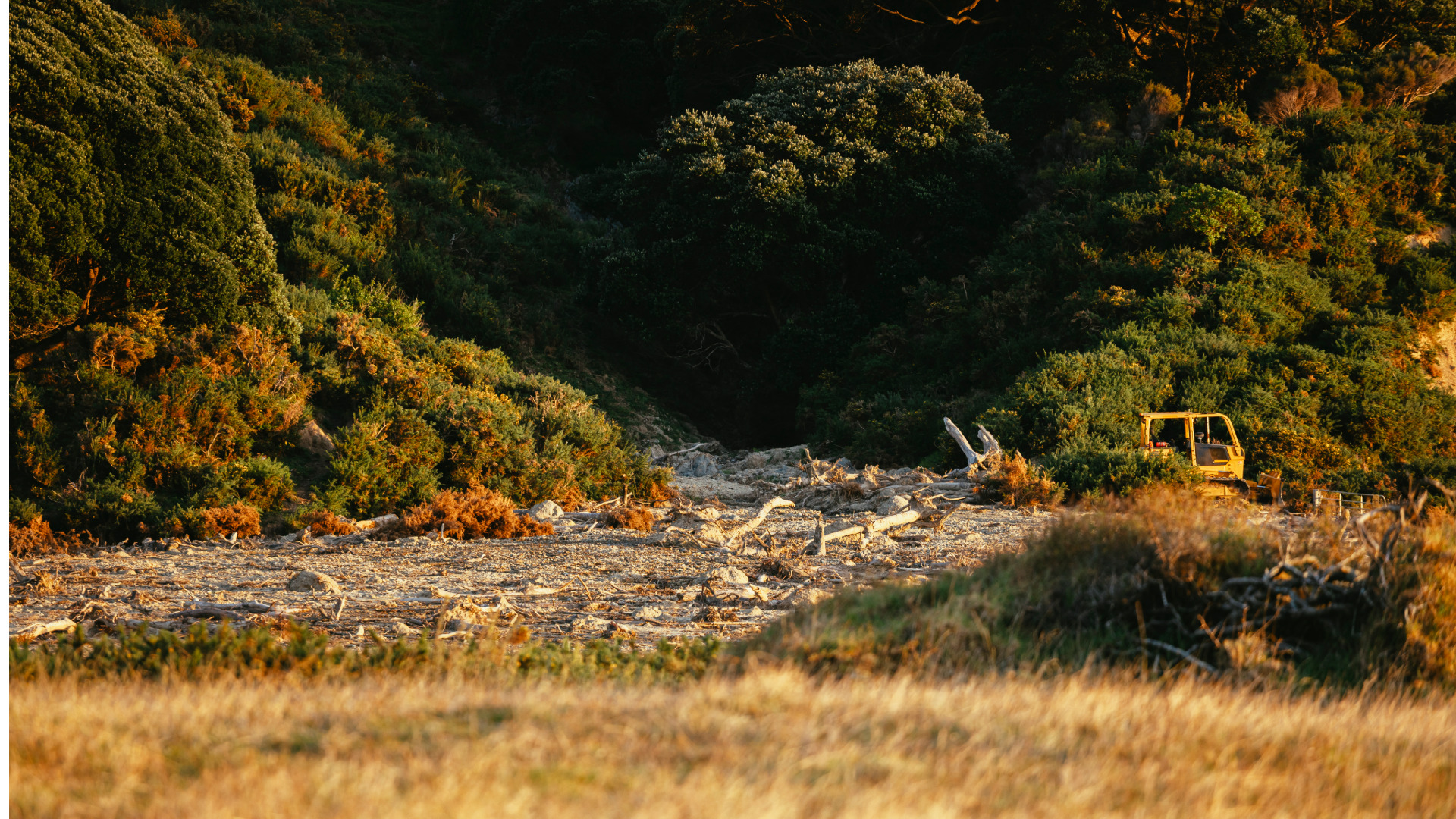
A new track had to be cleared after the extreme storm event of January 2026.
Goldilocks moment
Under the Toha Network pilot, Te Kautuku is trialling data templates for global nature markets that can bring revenue and investment to the whenua. "These new nature markets are different to the NZ Emissions Trading Scheme," Renee explains. "Rather than measuring carbon alone, they measure carbon sequestration, waterway health, biodiversity, landscape condition, and impact on community. They don't incentivise behaviour that ignores those things."
The data collected through the pilot helps demonstrate the regenerative value of the whenua in ways that global nature market investors can assess and act on, opening up new revenue streams without requiring Te Kautuku to compromise on its environmental values.
Renee has been directly involved in developing these templates from the ground up. "I've been part of the team developing the first templates, to make sure they will work for whenua Māori," she says. "We're also part of a global indigenous network ensuring these emerging markets work for indigenous peoples and don't put their landscapes in greater harm."
"For Māori landowners, I think we're in a Goldilocks moment. We're able to test these things out and build systems that work for us. We shouldn't underestimate our responsibility to be out ahead of the game, so that things are done by us, rather than done to us in these emerging markets."
Access to data and tools
Melissa Savage, Bioeconomy Science Institute Maiangi Taiao Kairangahau Matua and lead for Toka Tūpari the Land Use Decision-making workstream, has worked closely with Renee from the start. Her focus is on supporting Te Kautuku’s mosaic approach to land-use diversification and helping whānau access tools and data they would not otherwise have had.
“I think this work matters because Māori need to have a voice in everything actioned on the whenua,” says Melissa. “This is an opportunity for Māori to be part of the initiation from the very start — the decision-making — and then to see it through ourselves. The biggest thing is that we are building skills to make decisions for land transitions. More than that, we’re building our futures and building capacity and capability in our Māori whānau and hapū.”
Holding the space, building the future
For Renee, the value of the Land Use Transition programme goes beyond the tools and data it has helped unlock. It lies in the way the research relationship itself has been held.
"We have been fortunate that our Bioeconomy Science Institute Maiangi Taiao kairangahau understand we start with whakawhānaungatanga and spending time getting to know the whenua," she says. "Having a research partner who's able to hold that space for us and allow us to form relationships before getting to the research nitty gritty has meant we can engage in a way that feels safe, more grounded, and more able to honour our kaupapa and our intentions."
That relational foundation has also made room for something central to Te Kautuku's way of working: intergenerational learning. "Our mahi at Te Kautuku has always been intergenerational, and the Land Use Transition programme has supported that way of working. Every time we've done our eDNA testing, it's been my dad and his wife, myself, my siblings, and also my kids — three generations learning the mahi to take us forward so that we can continue to make changes and live on the whenua.”
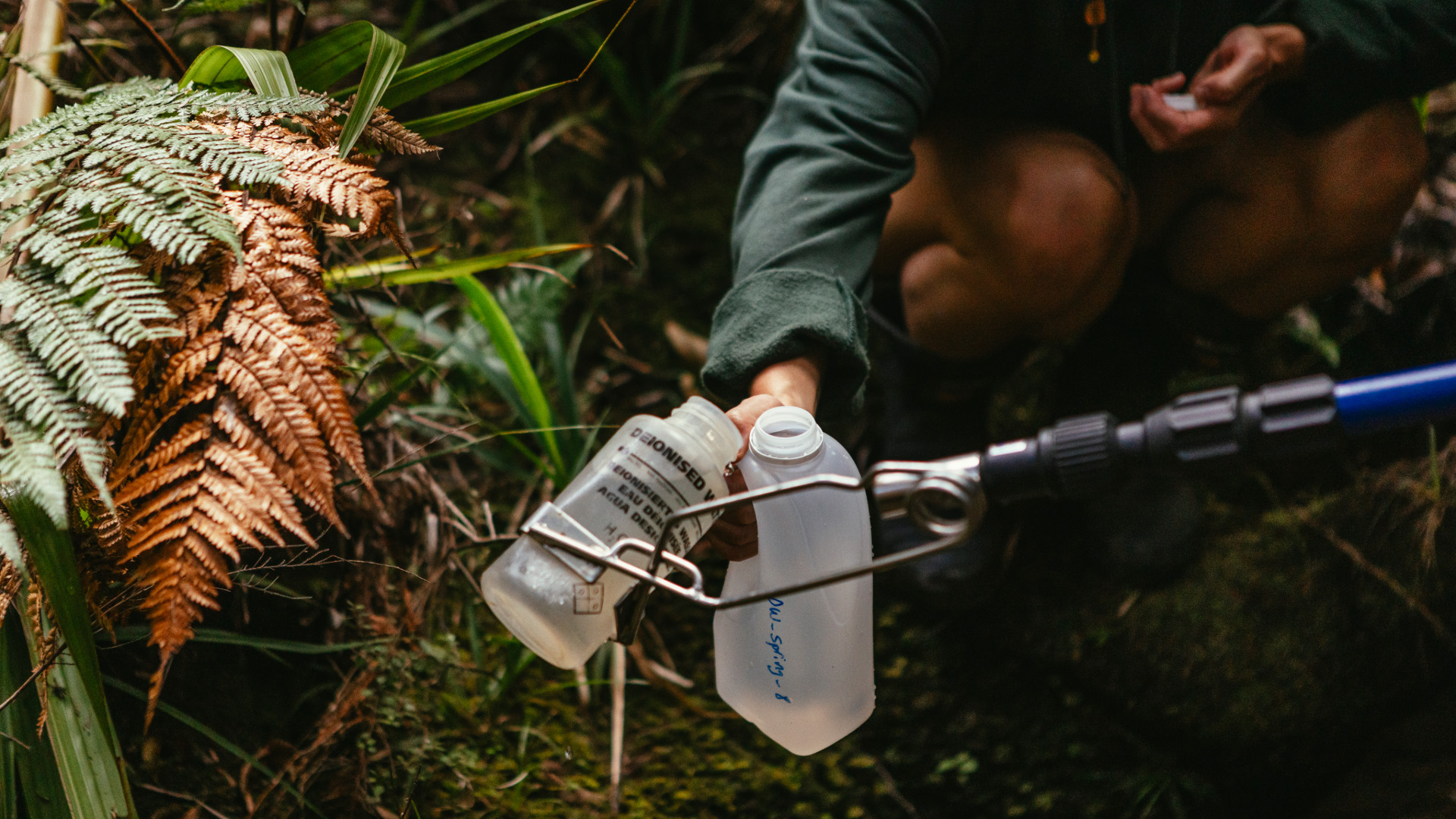
Renee Raroa and her son Awatere Richardson collecting eDNA samples
Find out more
Te Kautuku Trust is open to sharing learnings with other Māori Māori landowners and Māori agribusinesses considering transition. Contact details can be found on their respective website.
Te Kautuku Trust: https://toha.network/tekautuku