
In the second instalment of the Ka huri te kei o te waka: Māori Agribusinesses Navigating Land Use and Enterprise Transition series, we look at Mānuka Performance, a Māori company driven by a vision to move beyond selling mānuka honey in a jar and instead unlock the unique rongoā and bioactive properties of indigenous honey. Mānuka Performance is one of four Māori agribusinesses partnering with the Bioeconomy Science Institute Maiangi Taiao through its Land Use Transition programme, alongside Kānuka Charitable Trust, Te Kautuku Trust, and Te Pū Oranga Whenua Collective.
Overlooked and undervalued
For decades, many Māori honey producers have operated as price-takers in a volatile commodity market, paid by the drum with limited control over its value. While the industry has largely focused on premium mānuka honey grades, vast quantities of multifloral honey and beehive by-products have been overlooked, sitting unwanted in sheds or washed down the drain. That is now beginning to change. Thanks to emerging scientific insights and the innovation of businesses such as Mānuka Performance, these undervalued resources are being reimagined as high-value bioactive products for international markets.
Mānuka Performance is a Māori Research, Innovation and Bioactive Intelligence company based in Whakatāne, co-founded in 2019 by Tristan Vine (Ngāti Kuri, Muriwhenua, Tūhoe) and Jeremy Gardiner (Ngāti Awa). From the outset, the company set out to pioneer research into the polyphenols found across a variety of native New Zealand honeys such as rewarewa and bushblend, many of which have traditionally been undervalued by the honey industry. Polyphenols are naturally occurring plant compounds with proven health benefits.
Grounding that science in mātauranga Māori, Mānuka Performance is developing evidence-based, high-value products for global export markets. Their first product was a sports gel brought to market in just three months. Mānuka Performance now produces a growing range of sports nutrition, energy recovery, and chronic disease health supplements, as well as pet and equine performance products, reaching markets in the US, UK, the Middle East, India, China, and South Korea.
Moving up the high-value chain
Tristan represents Mānuka Performance on the Bioeconomy Science Institute Maiangi Taiao Land Use Transition programme, which recognises that there is no single pathway for change and that Māori agribusinesses are on different transition journeys. Mānuka Performance is part of the high-value chain transition work-stream, which supports enterprises already operating within an established market to move up the value chain into higher-value products. In Mānuka Performance's case, that means moving into nutraceuticals and sports performance products by utilising the bioactive properties of honey rather than selling it as a raw commodity.
Mānuka Performance was already working with Bioeconomy Science Institute Maiangi Taiao legacy organisation AgResearch before joining the Land Use Transition programme. Through the programme, they gained dedicated support from kairangahau Māori and scientists across multiple fields to help advance their research into polyphenols, explore Māori data sovereignty strategies, and undertake remote environmental data gathering. This includes conducting research into adding value to waste material that was previously discarded by the honey industry. It has been found that beehive dross, which is the leftover wax, honey, and frame material, actually contains higher levels of polyphenols than honey itself.
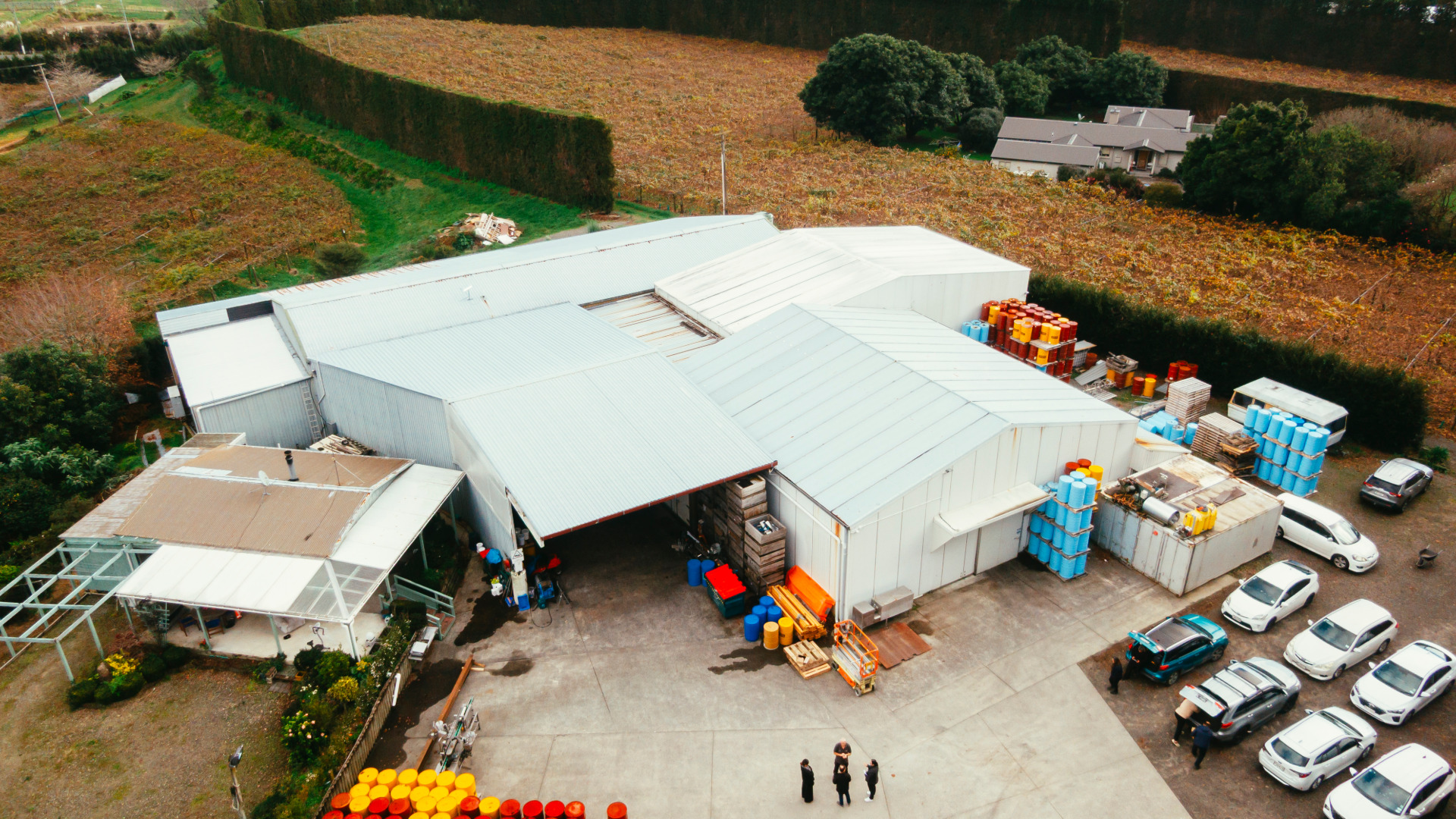
Mānuka Performance factory in Katikati
Blending Mātauranga Māori and Western Science
For Mānuka Performance, creating high-value products is about more than scientific validation. Tristan says the company's vision is to combine Mātauranga Māori with cutting-edge science to create products that tell a deeper story about people, place and provenance.
"As a kaupapa Māori company, our aim is to blend Mātauranga Māori with cutting-edge Western science," says Tristan. "If you take science on its own, it's just numbers and data, but adding a Māori lens brings human, cultural and spiritual elements that add incredible depth and richness."
Tristan says Mānuka Performance is working to connect consumers with both the science behind its products and the Māori communities that produce them. "We're putting rigorous science around what Māori already knew and connecting that all the way through to the consumer. The whakapapa of the honey, the kaitiaki of the land, the cultural connection to the whenua, and the science behind its health outcomes, all telling one story."
He believes this combination of science, provenance and culture offers a powerful point of difference in international markets. "Consumers genuinely want to know where their product comes from, who grew it, and who was part of that value chain.”
Relational and partner-centred approach
Mānuka Performance is also running a research pilot with Te Kautuku Trust, installing remote sensing equipment in the ngahere where their beehives are located. Connected via Starlink, the technology tracks sunlight hours, moisture content, and weather patterns in real time, with the goal of correlating seasonal conditions with honey yields to inform better land use decisions for both partners.
For Bioeconomy Science Institute Maiangi Taiao Land Use Transition programme co-lead Dr Selai Letica, the collaboration is a result of the programme's relational and partner-centred approach. "When you put the Māori research partners at the heart, much more becomes possible," she says. "You generate impact, and you support capacity and capability building more directly. Putting the partners and their implementation needs at the centre, rather than the science being at the centre and making the partners mould around that."
Selai sees that same collaborative approach reflected in Mānuka Performance and Tristan's leadership.
"What impresses me about Mānuka Performance is that they aren't content to stay within the traditional honey industry. They're constantly looking at how science, innovation and Māori values can create higher-value opportunities. Tristan is also committed to bringing others along on the journey. He builds capability around him and creates opportunities for other Māori businesses to grow alongside him.”
Multiple doors not just one
For Tristan, being part of the Land Use Transition programme has been transformative. "It's opened doors to different methods and different scientists, and we've been able to have robust conversations with experts in specific fields," he says. "We now have multiple doors, not just one, and access to better science, better research, and better data has been invaluable for what we're building."
Equally significant has been the programme's kaupapa Māori foundation. "Working at a candid level with researchers within a team that puts tikanga, te reo, and indigenous concepts first has been just as important as the science itself," he says. "So too has the work around Māori data sovereignty and remote data gathering, and how those insights feed into consumer markets and customer engagement."
However, it is the relationships that stand out most. "When we started the programme, we had a big wānanga session that set us all off on the right path, connecting kanohi ki te kanohi with the other Māori partners and the research team and breaking down barriers early on. Trust takes time. Getting that right from the outset has been the foundation of everything."
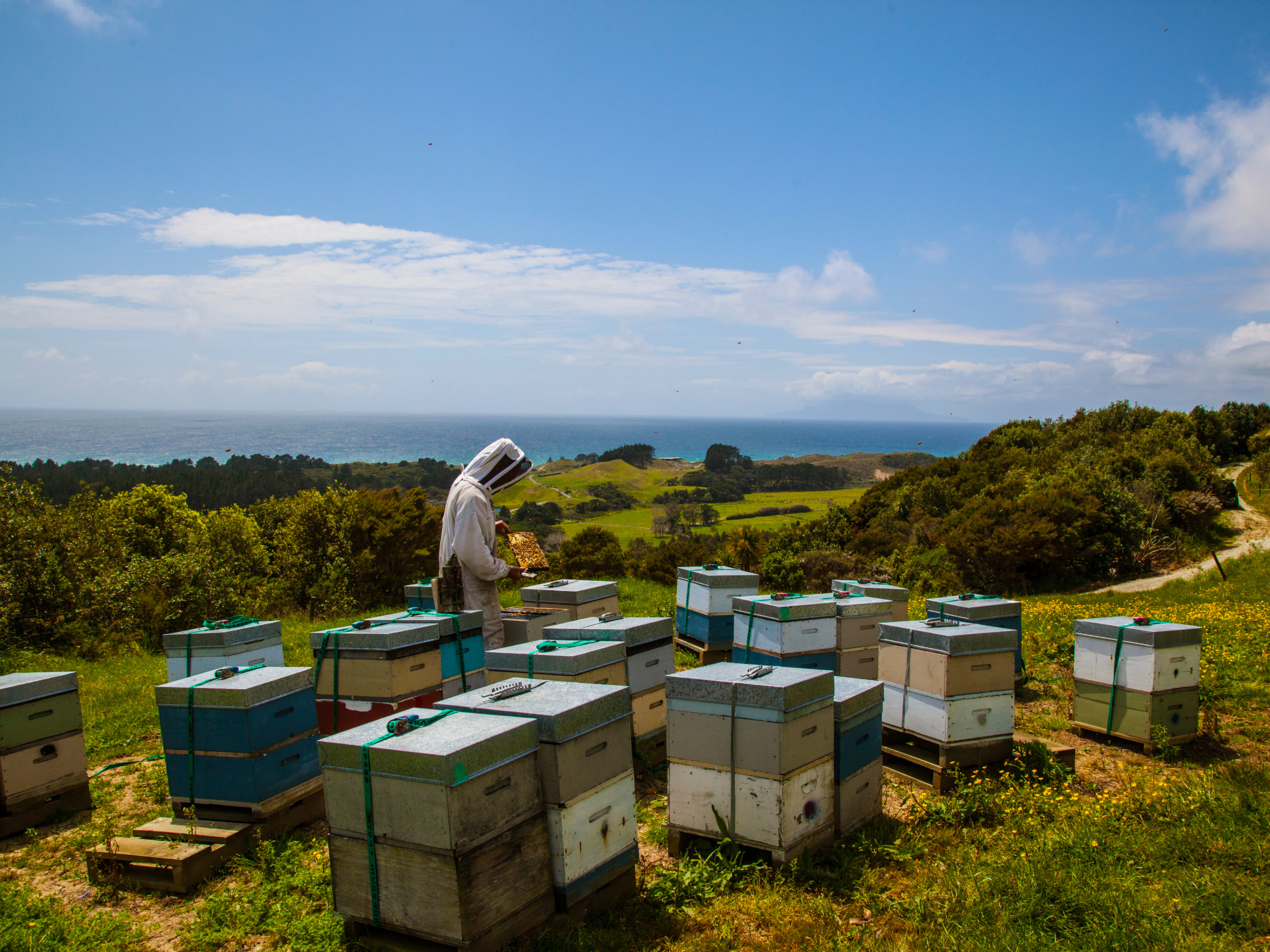
Apiarist checking on bees. Image: Peter Young, NZ Story
Find out more
Mānuka Performance welcomes enquiries from Māori landowners and Māori agribusinesses considering their transition options. Contact details can be found on their website.
manukaperformance.com