
In the first instalment of the Ka huri te kei o te waka: Māori Agribusinesses Navigating Land Use and Enterprise Transition series, we look at Kānuka Charitable Trust, a rōpū on a mission to turn around the perception of kānuka from a nuisance scrub to a high-demand rongoā for the global wellness market. Kānuka Charitable Trust is one of four Māori agribusinesses partnering with the Bioeconomy Science Institute Maiangi Taiao through its Land use transitions to enhance Māori communities programme, alongside Mānuka Performance, Te Kautuku Trust, and Te Pū Oranga Whenua Collective.
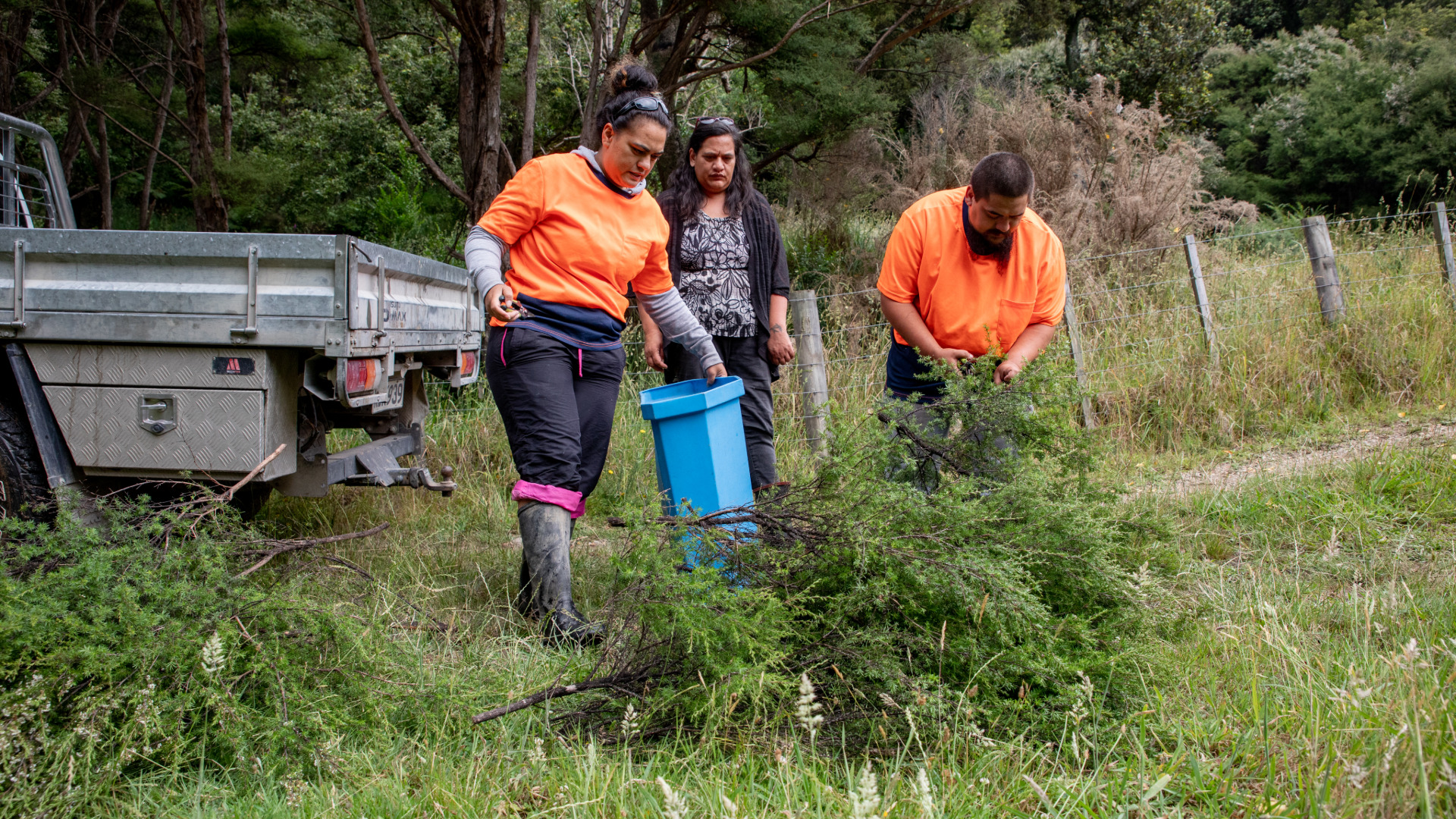
Bella Paenga and whānau harvesting Kānuka from their whenua
Building a kānuka industry from the ground up
For generations, the commercial potential of kānuka was largely overlooked by many Māori landowners. Often seen as an obstacle to productive land use and good for little more than firewood, kānuka was cleared by gangs of scrub-cutters to make way for revenue-generating activities such as grazing livestock or forestry. However, thanks to new scientific insights and the advocacy of Māori organisations such as Kānuka Charitable Trust, perceptions of kānuka are starting to change.
Kānuka Charitable Trust was established in 2023 by a group of Māori landowners and Māori business leaders to protect kānuka as a taonga species and ensure Māori values guide the development of an emerging kānuka industry. Manu Caddie (Ngāti Pūkenga, Waitaha-ā-Hei, Ngāti Hē) is a founding trustee of Kānuka Charitable Trust and also a co-founder and director of Hikurangi Bioactives Limited Partnership, a social enterprise established in 2016 to create economic opportunities for Māori communities on the East Coast.
Together, the two organisations are working to build a kānuka industry with the potential to be transformational for Māori. Their shared goals are to deliver economic and employment gains for rural communities, create self-employment opportunities, enhance biodiversity on Māori land, and support the social and cultural wellbeing of the whenua.
Accessing support and expertise
Manu represents Kānuka Charitable Trust on the Bioeconomy Science Institute’s Land Use Transition programme, which recognises that there is no single pathway for change and that Māori agribusinesses are on different transition journeys. The Trust is part of the emerging transition pathway workstream within the programme, which supports Māori agribusinesses moving away from subsistence or traditional land use and exploring new and evolving land-use options. Through the programme, Kānuka Charitable Trust has accessed support from Kairangahau Māori and expertise of scientists and researchers to develop research projects involving analytical chemistry, environmental and survey data collection, and data governance.
Global interest and opportunities
Manu says that although the kānuka industry is still emerging, significant progress has been made by Kānuka Charitable Trust and Hikurangi Bioactives in exploring new high-value pharmaceutical markets and unlocking the latent medicinal and commercial value of kānuka oil. Research over the past two decades has shown that kānuka contains bioactive compounds, naturally occurring substances with anti-inflammatory and antimicrobial properties, and this is now opening up opportunities in pharmaceutical, health, and wellness markets.
He says their work attracted global attention in 2022 following the publication of clinical trial results in a prestigious international medical journal. The trials found that an eczema cream developed by Hikurangi Bioactives, containing 3% kānuka oil, significantly reduced eczema severity compared with existing treatments.
As a result, an American company became interested in launching a kānuka eczema cream in the U.S. market. They plan to launch later this year, with three East Coast kānuka producers supplying 2,500 kilograms of kānuka oil, worth $2 million, to produce the product. The company also acquired U.S. and global licensing and intellectual property rights from Hikurangi Bioactives in exchange for royalties on every unit sold.
The prospect of a global market for kānuka is prompting Māori landowners to take a closer look at the indigenous resource already on their whenua. Manu welcomes their growing interest, but says Kānuka Charitable Trust and Hikurangi Bioactives are cautious about raising expectations.
"The scale of what the kānuka industry could become is still being understood. That's why it's an emerging industry. Kānuka may become the next mānuka honey, or it may not. What we do know is that the opportunity is real, and Māori are in the driving seat."
Supporting informed land-use decisions
While international demand is helping validate the opportunity, the Trust is equally focused on ensuring Māori landowners have the information they need to make informed decisions about whether growing kānuka is right land use for their whenua.
To provide Māori landowners with tools to support their decision-making, the Trust partnered with the Bioeconomy Science Institute Maiangi Taiao to develop a kānuka cultivation and harvesting framework tool. This is designed to give Māori landowners real numbers to work with when weighing up the opportunity costs of growing more kānuka versus grazing sheep, cattle, or pine forestry.
“The goal is to be able to show landowners exactly what they could expect to earn per hectare,” says Manu, “and whether they choose to contract harvesters, have someone come in and pay them by the tonne, or put their own whānau to work.”
Dr Selai Letica, Bioeconomy Science Institute Maiangi Taiao Land Use Transition programme co-lead, has been supporting the Kānuka Charitable Trust through the emerging transition workstream. She believes the practical, plain-language information resource is exactly what small whenua Māori landowners need when considering a transition.
“Most modelling systems have been built for large, corporate farm entities and are often the wrong tool for many of the smaller Māori landholdings. It’s like taking a scientific calculator to a year one maths test. These small blocks aren't Uber businesses. They are whānau-owned, low-input systems where the owners might not be interested in making a huge profit or being highly productive, but do they want to leave a legacy for their mokopuna.”
The “and/and” ambition
For Selai, what Kānuka Charitable Trust is pursuing reflects a defining characteristic of many Māori agribusinesses: what she calls the “and/and” ambition.
“They want and/and, not either/or,” she says. “Traditionally, with sheep and beef farming on marginal whenua, you often face a trade-off. You can have high productivity and profitability, but at an environmental cost through erosion and land degradation. Or you can prioritise environmental outcomes, but with limited economic return.”
“What Kānuka Charitable Trust is exploring is whether kānuka can deliver both. By planting or allowing kānuka to regenerate, whenua can be stabilised and biodiversity enhanced. At the same time, harvesting kānuka and extracting its oil creates the potential for commercial returns.”
“For Māori agribusinesses, commercial viability and environmental stewardship are not competing objectives. They are pursued together.”
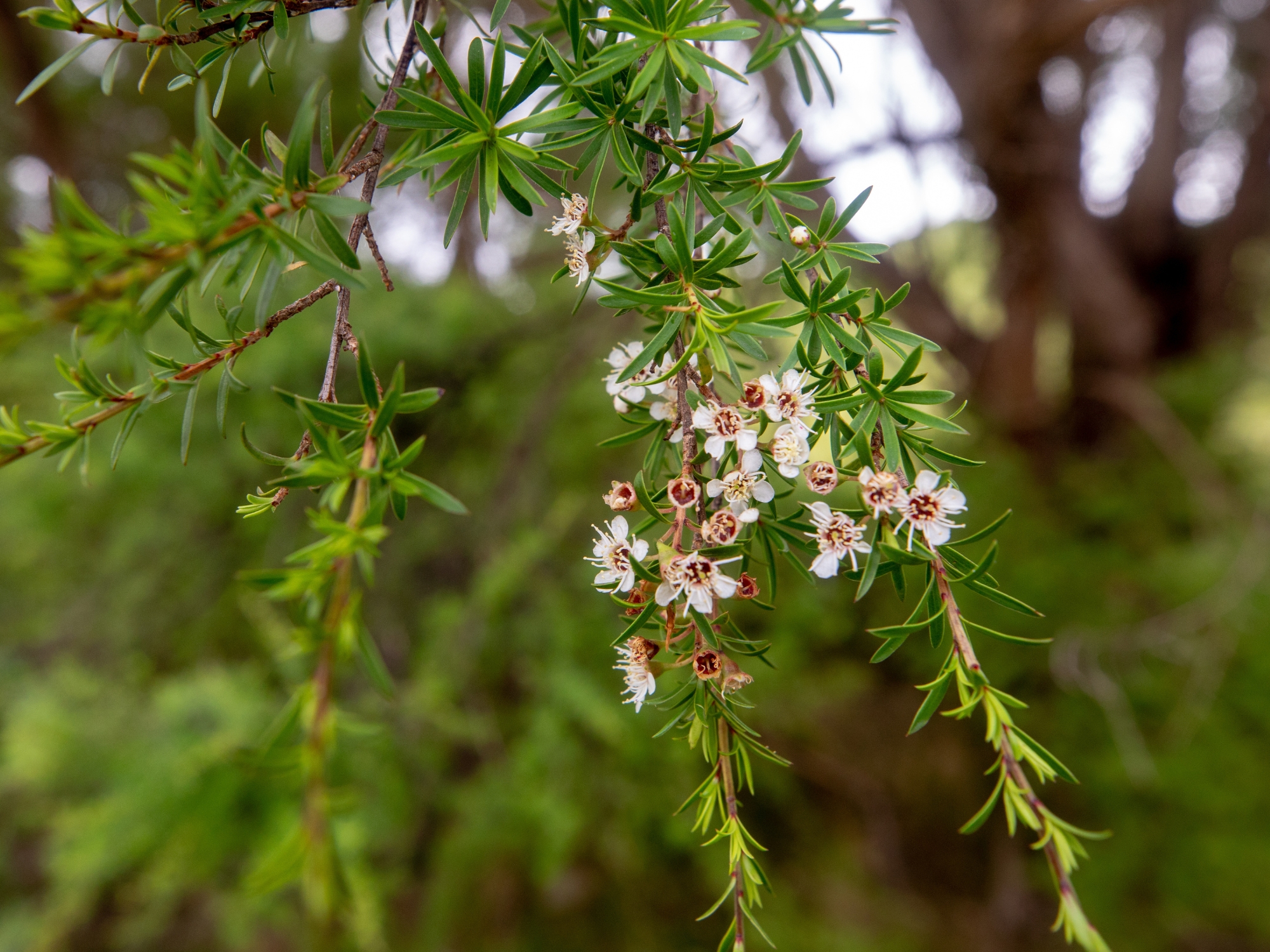
Kānuka in flower
Find out more
The full kōrero from Manu Caddie on navigating an emerging industry, taking considered risks, and what Māori landowners and businesses should know before they transition is available in the Ka huri te kei o te waka: Māori Agribusinesses Navigating Land Use and Enterprise Transition publication and video resources, available on the Bioeconomy Science Institute Maiangi Taiao Land use transitions to enhance Māori communities programme page.
Kānuka Charitable Trust and Hikurangi Bioactives welcome enquiries from Māori landowners and Māori agribusinesses considering their transition options. Contact details can be found on their respective websites.