
Monday, 7 September 2026
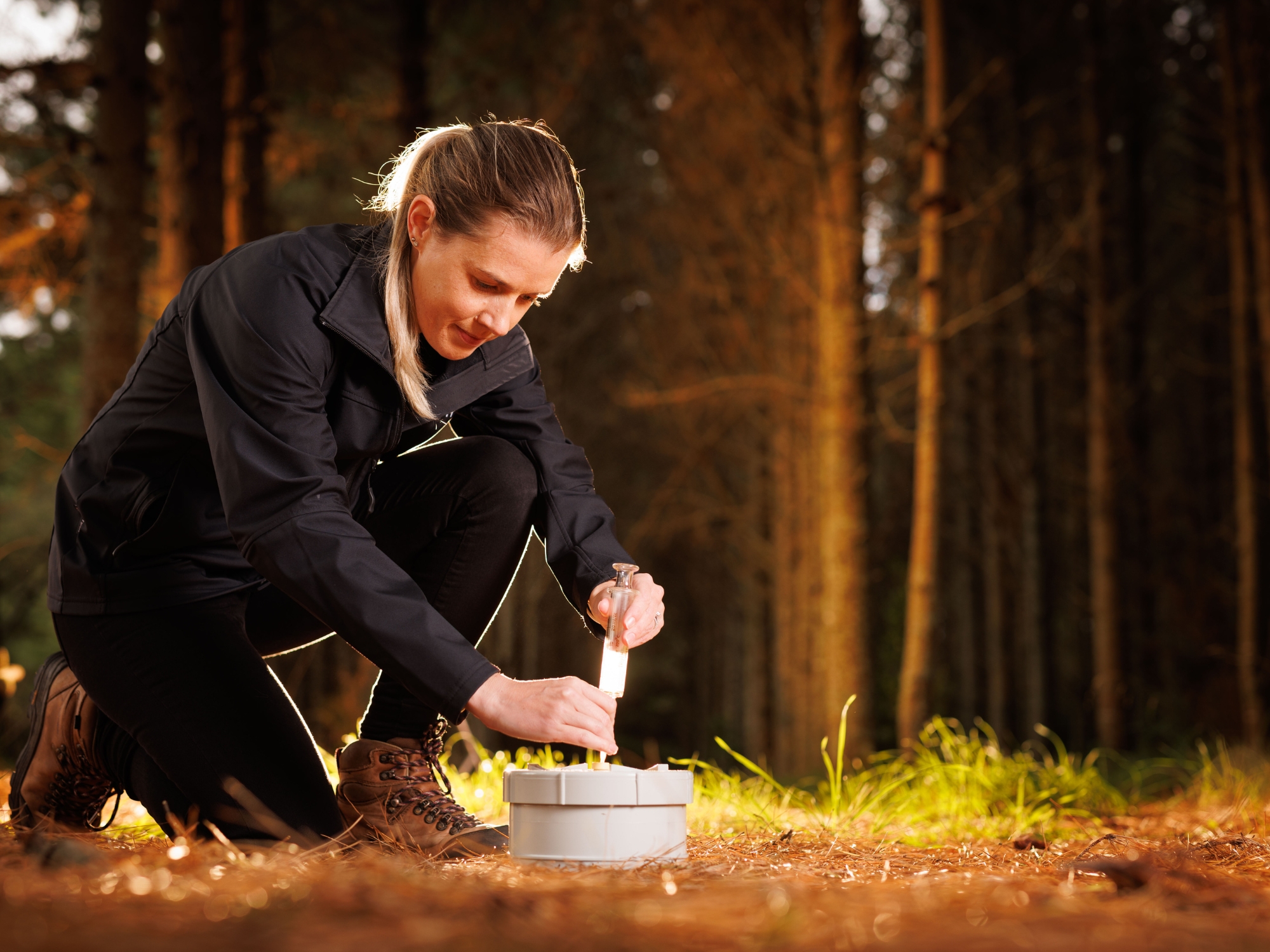
Methane project research lead Kathryn Walker
Run over two years, the research looked at the methane uptake of soils in three planted forests – Orton Bradley Park and McLeans Island in Canterbury and Kaingaroa (New Zealand’s largest commercial pine plantation, in the Bay of Plenty) – that represent ‘typical’ New Zealand forests. This is the first time methane uptake in soils has been measured at multiple sites with sampling spanning all four seasons.
Supported by Lincoln University and funded by the Ministry for Primary Industries, the study aimed to help the agricultural sector addressing the continued challenge of reducing emissions.
Planted forest soils are good habitats for the types of bacteria that absorb methane (CH4) as a source of carbon and energy. By quantifying how much methane is consumed by the bacteria at field sites, researchers can better understand the role planted forest soils play in New Zealand’s drive to meet emission-reduction goals.
Methane flux chambers were installed at each site and samples were taken every month for a year to measure methane exchange between the soil and the atmosphere. Research lead Dr Kathryn Walker says the work is timely as New Zealand works toward meeting its emissions reductions targets.
Monitoring showed soils absorbed 2.5 - 2.8kg CH4 per hectare each year, with uptake reaching up to 15g CH4 per hectare per day. There was variation in uptake rates across sites and seasons. “Considering New Zealand has 1.8 million hectares of planted forests, that’s a significant amount of methane being removed by forests each year,” Dr Walker says.
“The research has helped us learn more about forestry’s capability to offset methane emissions and can be used to paint a more accurate picture of New Zealand’s total net carbon budget. For example, it shows the amount of methane uptake could offset almost all CO2 from all liquid fuels used for rail in New Zealand in 2022, or about 80 percent of CH4 emissions from natural gas production.
“This study has provided a strong background to support future research,” she says.
“We’ve shown New Zealand’s planted forest soils are significant methane sinks and are a promising resource that could be managed to help meet emissions reduction targets. However, there are still a lot of unknowns about methane cycling in our planted forests. There are other parts of the forest such as the tree litter on the forest floor, tree stems and needles that could influence or be involved in methane flux in the forest.
“These other components need to be considered and measured before methane uptake by forest soils is included in national greenhouse gas budgeting.”
The research team now has further funding from the Strategic Science Investment Fund (SSIF) to look at whether methane uptake in forests could be increased through nutrient addition or litter layer management.“There is little understanding of the role of the litter layer in methane cycling, yet it sits right on the soil-atmosphere interface where methane uptake is occurring,” Dr Walker says. “We want to find out whether there is potential to manage this to increase methane uptake.”
Methane is a potent greenhouse gas, 28–35 times stronger than CO₂ and responsible for about 30 percent of global warming. Its strong warming influence but short-lived nature means tackling methane emissions offers an immediate opportunity to slow climate change.
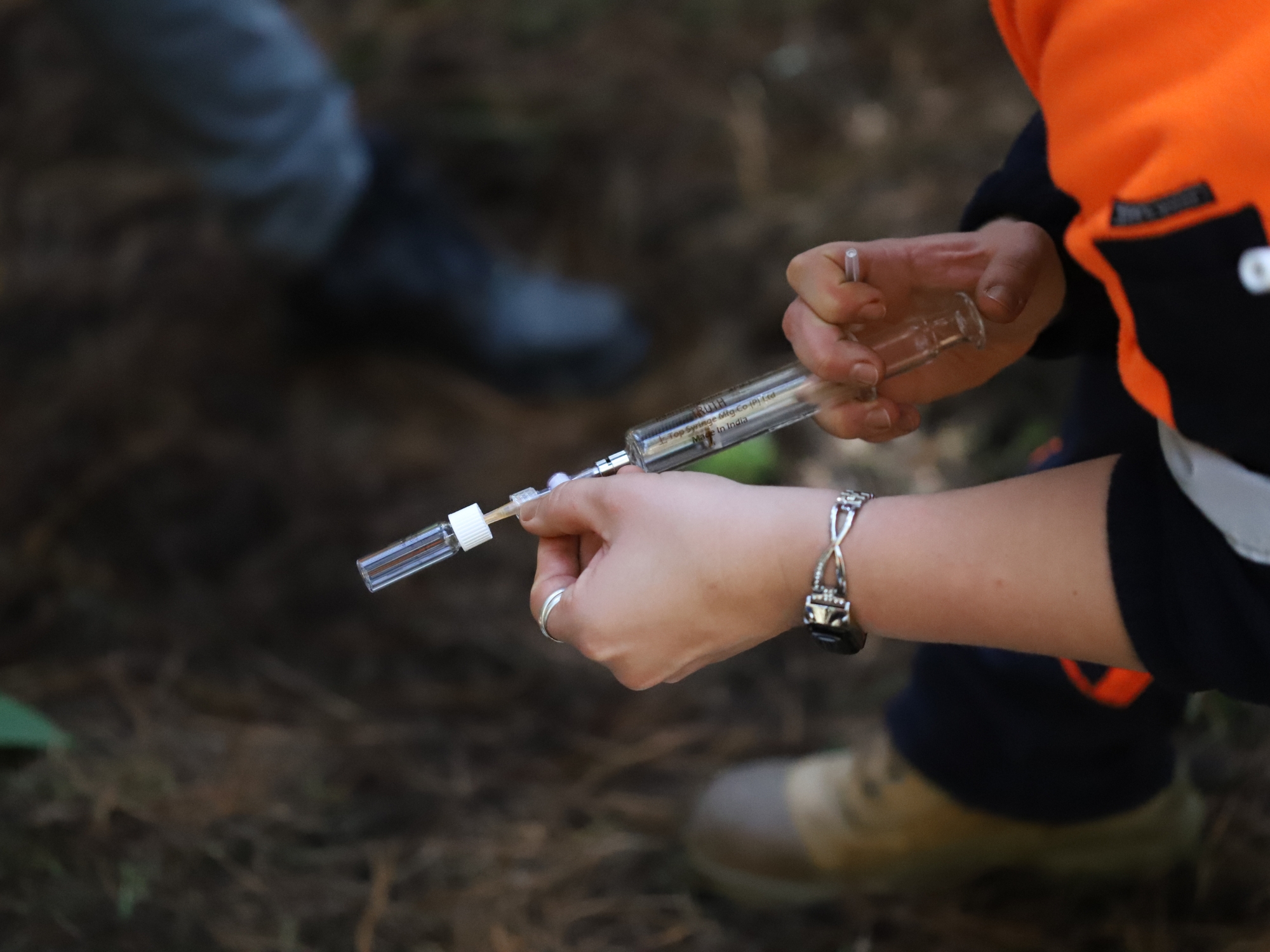
Gas samples from planted forest sites can show how fast soil microbes consume methane
Media contact
If you’re a journalist interested in this news, please contact a member of the communications team:
Greg Ford, Principal Communications Advisor
Email: greg.ford@agresearch.co.nz
Mobile: +64 (0)21 832 351
Justine McLeary, Senior Communications Advisor
Email: justine.mcleary@scionresearch.com
Mobile: +64 (0)27 241 5649
Maja Burry, Senior Communications Advisor
Email: maja.burry@plantandfood.co.nz
Mobile: +64 (0)27 437 5408