
Tuesday, 15 September 2026
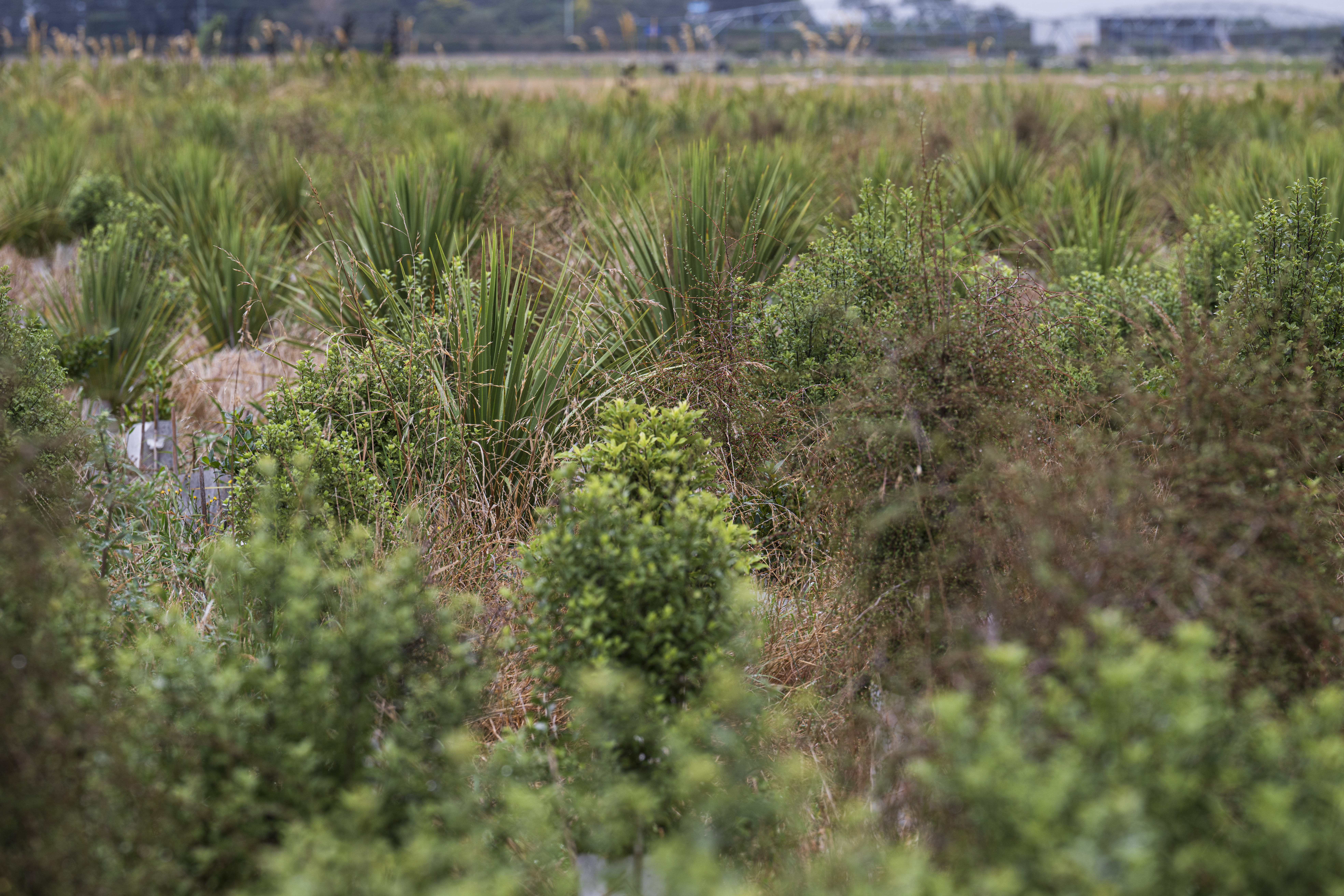
Native plantings on a farm in Canterbury.
A new guide has been launched to help farmers and landowners use native plantings to attract beneficial insects that can help improve pollination and control pests.
The guide has been developed as part of a five-year research project led by the Bioeconomy Science Institute Maiangi Taiao which involved monitoring insect populations on more than 60 Canterbury farms.
Project lead Dr Brad Howlett says while native plantings are often established to improve biodiversity, water quality, erosion control, or farm aesthetics, prior to this research less was known about their potential to support diverse pollinators and natural enemies of crop pests, and the benefits these insects may provide to farming systems.
To help answer these questions, the Biodiversity for Beneficial Insects programme worked with Canterbury farmers and partners to undertake on-farm research, case studies, surveys, field demonstrations, and extension activities.
“While bees are often recognised for their role in pollination, many farmers were surprised to learn that a wide range of insects, including flies, beetles, lacewings, ladybirds, and parasitoid wasps, contribute important pollination and pest-control services,” says Dr Howlett.
The programme was supported by the Ministry for Primary Industries’ Sustainable Food and Fibre Futures fund (now the Primary Sector Growth Fund). Partners included FAR, Synlait, Southern Pastures, Pāmu, Beef + Lamb New Zealand, Brailsfords, Selwyn District Council, Environment Canterbury, and Te Ara Kākāriki.
Dr Howlett says their research on Canterbury dairy and arable farms showed that native plantings supported higher pollinator abundance and diversity than simple bare fence-line boundaries. Importantly, these benefits strengthened as plantings matured.
Crop plants placed beside mature native plantings received more visits from pollinating insects and produced more seeds than those beside bare fence-line controls. In trials, the seed-production shortfall was around 25 percent beside bare fence-lines, but only around 2-6 percent beside mature native plantings, highlighting the potential for native biodiversity plantings to enhance pollination in nearby crops.
During the on-farm monitoring, researchers also found native plantings showed promise for supporting natural enemies of crop pests, with many of these plants providing habitat for predatory insects, such as brown lacewings, and spiders.
As part of the project, a comprehensive guide was launched today at an event in Tai Tapu. The guide aims to help Canterbury farmers and other landowners establish new plantings and better understand the beneficial insects that are attracted to different plant species found throughout the region.
Synlait’s on-farm biodiversity lead, Sarah Mason, says the guide is going to be a valuable resource for farmers in the region.
“Widespread planting of native species has the potential to create healthier, more resilient farming systems that rely less on chemical inputs while remaining productive.”
Media contact
If you’re a journalist interested in this news, please contact a member of the communications team:
Greg Ford, Principal Communications Advisor
Email: greg.ford@agresearch.co.nz
Mobile: +64 (0)21 832 351
Justine McLeary, Senior Communications Advisor
Email: justine.mcleary@scionresearch.com
Mobile: +64 (0)27 241 5649
Maja Burry, Senior Communications Advisor
Email: maja.burry@plantandfood.co.nz
Mobile: +64 (0)27 437 5408