
For more than 100 years, New Zealand scientists have been protecting our forests from diseases that threaten their health and productivity. Dothistroma needle blight – which attacks pine needles and can stunt tree growth if left unchecked – is one of the most significant.
Since the disease was first detected in New Zealand in the 1960s, science has been at the forefront of efforts to understand, monitor and manage the disease. This included developing treatment technology – such as aerial spraying of copper-based fungicides, which proved effective and is now used regularly across the sector – and breeding radiata pine stocks with an increased level of resistance.
The work has helped forest owners identify risks, make informed decisions and reduce the impact on forests across the country.
New Zealand’s success in developing effective treatments contributed strongly to the development of the industry we have today. Behind that success lies decades of scientific detective work. Researchers have tracked how the disease spreads, investigated the environmental conditions that favour outbreaks and developed practical management approaches that are still used today.
Today, researchers continue to stay ahead of emerging threats by combining generations of knowledge with cutting-edge tools and technology, including advanced diagnostics and climate modelling and environmental impact studies, to help protect forests that support communities, jobs and livelihoods
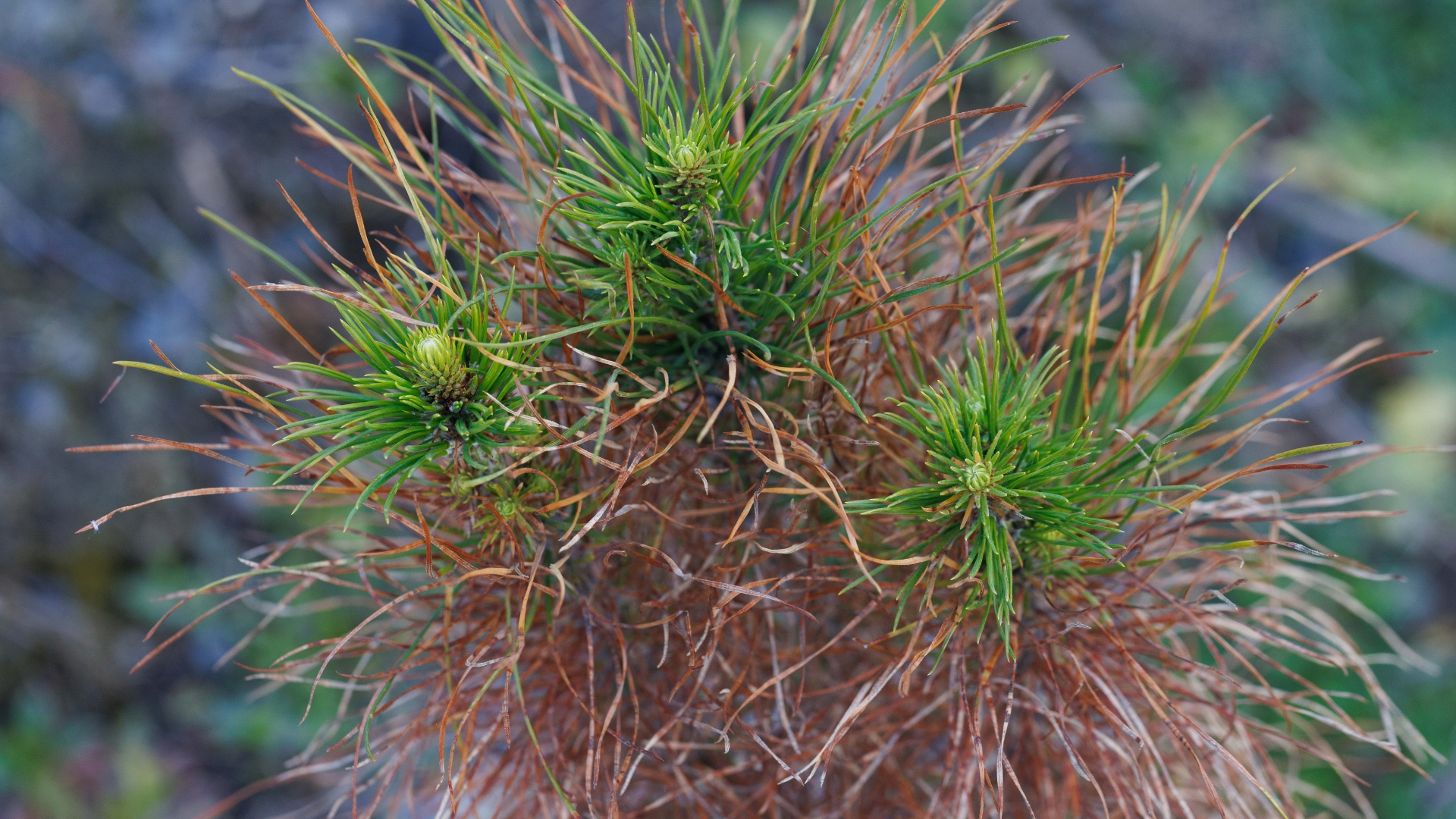
Pine needles affected by Dosithroma