
Forest science in New Zealand has been reshaping how the world grows trees for more than 100 years.
What began as a response to limited native timber supply has evolved into a research-led system adopted around the world. Sustained investment in breeding and genetics has delivered faster-growing, stronger and more resilient radiata pines. These varieties produce more uniform timber, are more resistant to pests and disease and let growers match trees to specific sites, improving productivity while reducing risk.
These innovations have been exported internationally, helping establish radiata pine as a cornerstone species in countries as diverse as Chile, Australia and South Africa – demonstrating how innovation from a small country can deliver global impact.
From site preparation to optimal tree spacing, New Zealand science has accelerated the growth of highly productive planted forests. It has defined how forests are established, spaced and managed for maximum productivity and resilience. Our world-leading research into plant microbiomes has also highlighted their potential as a pathway for improving forest health, productivity and resilience.
Today, tools such as remote sensing, modelling and precision forestry continue to build on this legacy. forest structure and growth can be mapped in fine 3D detail using LiDAR, while multispectral and hyperspectral imagery reveals subtle changes in tree health invisible to the eye, giving managers smarter, data-driven insights into their forests. These tools help identify and monitor pests and disease and analyse the environmental impact of forest operations.
Together, these innovations have turned plantation forestry into a sophisticated, science-led system – producing forests that grow faster, capture more carbon and produce higher-value timber for a global market.
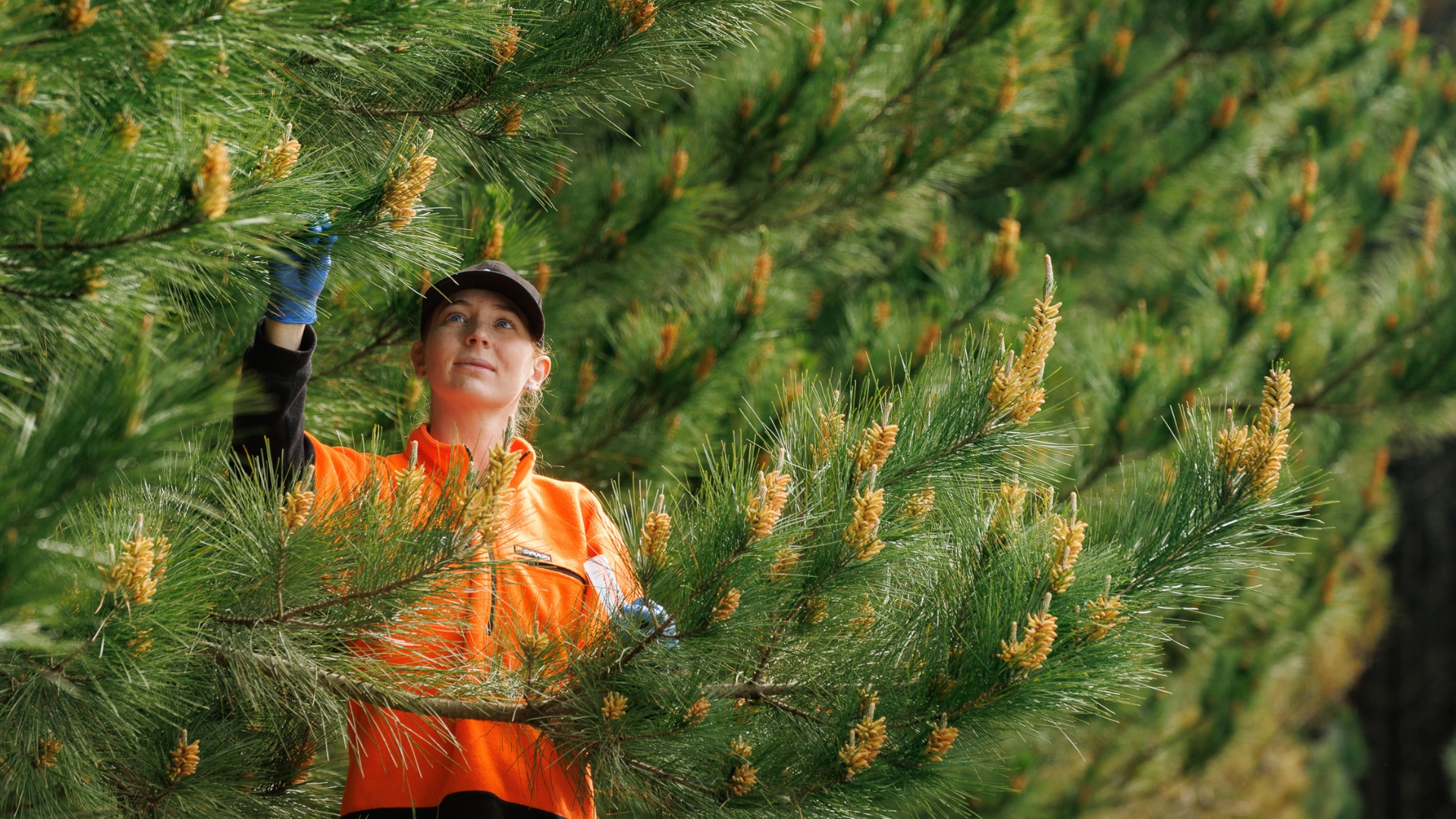
Forest scientist Lottie Armstrong in the field