
Friday, 19 June 2026
A growing problem with widespread impact
Some of New Zealand’s wilding conifer challenges stem from well-intentioned decisions of the past.
Species like lodgepole pine, originally introduced for erosion control and wood production in high country environments, have since spread aggressively. Without effective management, the consequences are significant.
Over the next 25 to 30 years, wilding conifers could spread across large parts of the country, affecting up to a quarter of New Zealand’s land.
The impacts are wide-ranging:
- Loss of productive land
- Reduced hydroelectric generation
- Threats to native species and ecosystems
- Transformation of iconic New Zealand landscapes
These invasions also affect cultural heritage and whenua. At places like Mount Tarawera, wilding conifers have been spreading since the 1960s and 70s. Our partner in the VLR programme, Ruawahia 2B Trust, has worked tirelessly to manage the problem, but ongoing pressure highlights just how persistent and dynamic these invasions can be.
A collective challenge
Wilding conifers don’t respect boundaries — and neither can the response.
“The wilding conifer problem is something we either win together or lose together.”
If control efforts succeed in one area but fail in another, reinvasion pressure will continue to spread. This makes collaboration essential.
Researchers at the Bioeconomy Science Institute work closely with the National Wilding Conifer Control Programme and the Wilding Pine Network, sharing knowledge, aligning approaches, and contributing to continuous improvement.
This partnership approach ensures that:
- Research is translated into real-world action
- Control methods evolve as new knowledge emerges
- Communities and organisations stay connected and informed
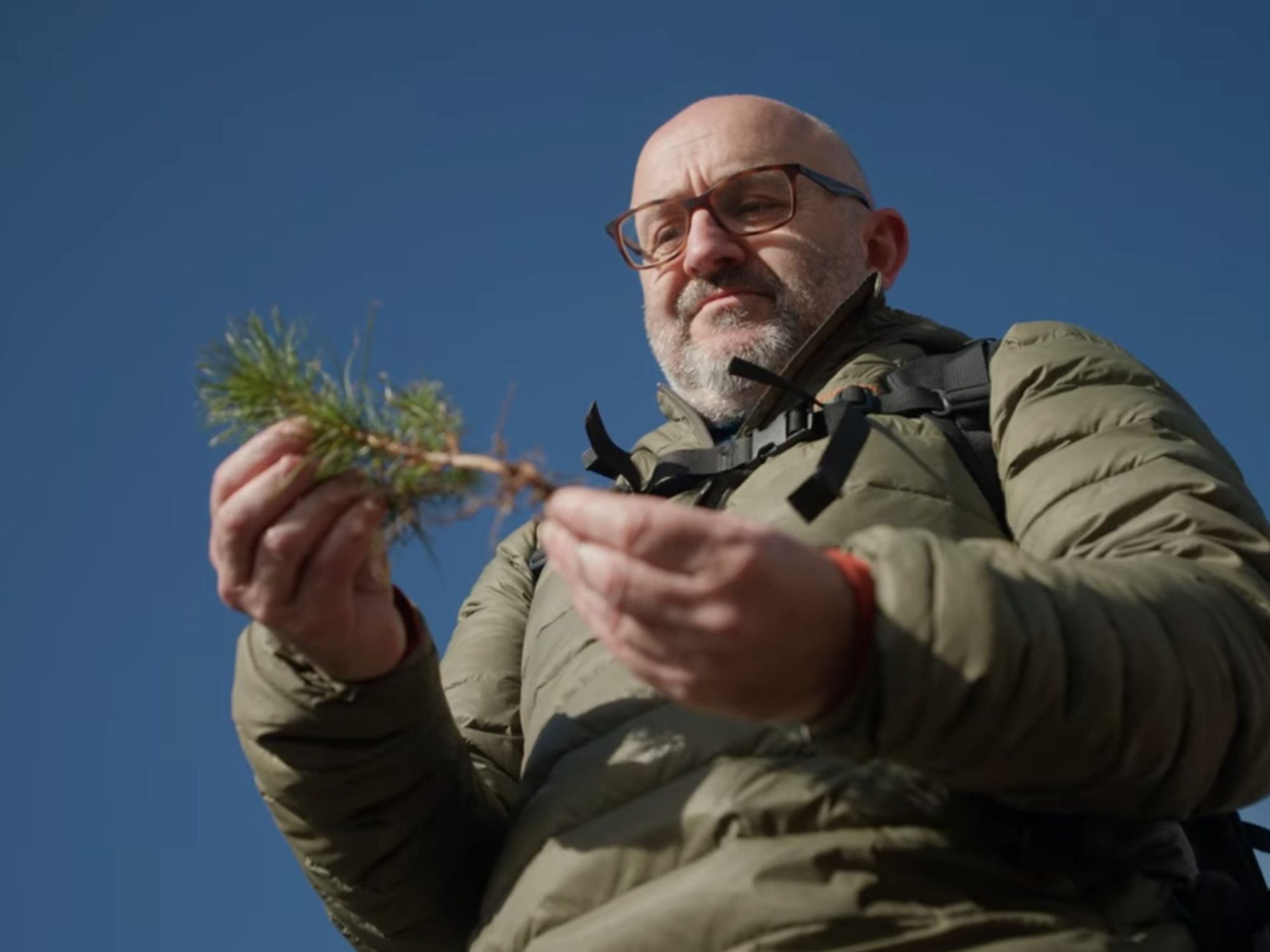
Thomas Paul with a wilding conifer seedling
From control to long-term resilience
Over the past decade, research has already delivered tangible improvements that are close to becoming implemented. For example, new spray technologies and formulations are predicted to reduce the cost of managing dense infestations by around 30%.
But stopping the spread is only the first step. Today, the focus is shifting to a more complex challenge: How do we prevent reinvasion?
This means looking beyond tree removal to better land management practices, restoring and strengthening ecosystems, and increasing resilience to future invasions.
Science driving solutions
Addressing wilding conifers as an ecological problem requires collaboration across disciplines and borders.
The Viva la Resistance programme brings together expertise from:
- Lincoln University
- University of Canterbury
- Australian National University
- National Center for Atmospheric Research (USA)
Together, researchers are working to answer key questions about invasion dynamics, ecosystem recovery, and long-term resilience.
A shared goal
Ultimately, managing wilding conifers is not a challenge any single organisation, community, or sector can solve alone.
It requires:
- Research and innovation
- Strong partnerships
- Coordinated action
- Long-term investment
The goal of Viva la Resistance is clear: optimise wilding conifer management for the long term by minimising reinvasion and maximising resilience.
It’s a complex problem but with a collective approach, it’s one New Zealand can tackle together.
Media contact
Bioeconomy Science Institue - Scion Group
Justine McLeary - Communications & Media Lead
+64 (022) 402 3526
justine.mcleary@scionresearch.com
Media contact
If you’re a journalist interested in this news, please contact a member of the communications team:
Greg Ford, Principal Communications Advisor
Email: greg.ford@agresearch.co.nz
Mobile: +64 (0)21 832 351
Justine McLeary, Senior Communications Advisor
Email: justine.mcleary@scionresearch.com
Mobile: +64 (0)27 241 5649
Maja Burry, Senior Communications Advisor
Email: maja.burry@plantandfood.co.nz
Mobile: +64 (0)27 437 5408