
Tuesday, 10 February 2026
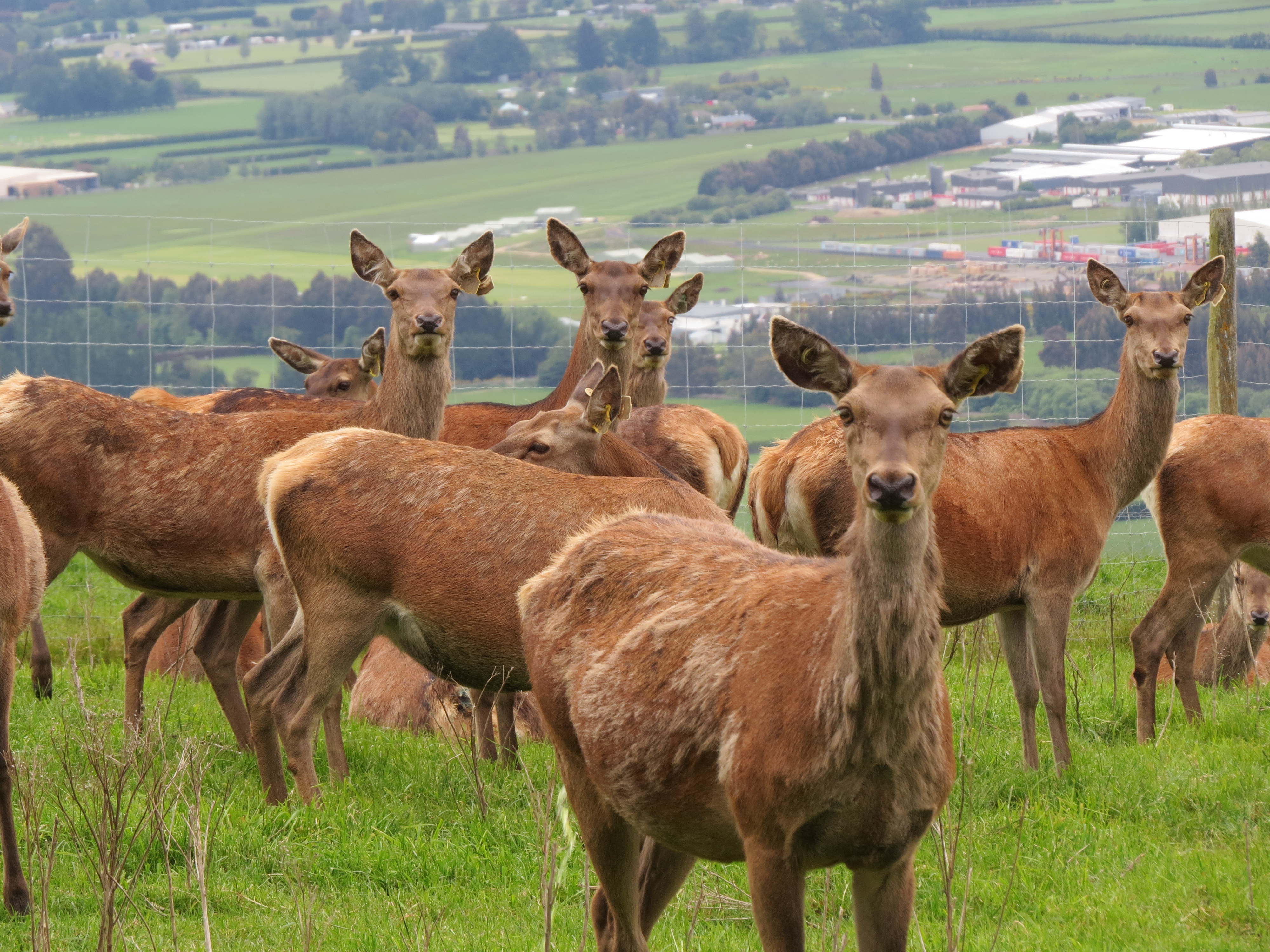
Red deer naturally grow in seasonal cycles. Their biology is hard wired for Northern European winters, when food is scarce and survival depends on reducing appetite and conserving energy. On New Zealand farms, this built-in rhythm means many animals slow or stop growing through winter.
Data from a Bioeconomy Science Institute study that followed young male deer from summer through to the following spring has been reanalysed and presented at the International Deer Biology Conference. It reveals that the timing, or phase, of this internal growth clock has a major impact on final body weight, while the size of each growth spurt (the amplitude) matters far less.
In practical terms, phase refers to when growth switches off and on: when the winter slowdown begins and when spring growth restarts.
“One of the striking findings was that even a one-day delay in the restart of growth equated to a 2.2 kilogram difference in final bodyweight,” says research team spokesperson Bryan Thompson. “It highlights that genetics plays a meaningful role in determining an animal’s internal growth timetable.”
Farmers may not talk about “phase” and “amplitude”, but many will recognise the pattern. Some already know which sires consistently produce progeny that thrive in winter and which do not. They may have quietly moved away from certain bloodlines without ever knowing the underlying reason. This research provides scientific validation for what many sharp-eyed farmers have been observing for years.
It also helps explain why different deer genetics behave differently. English-type deer tend to have a long winter shutdown, while Eastern European lines often have shorter inhibition periods and resume growth earlier in spring. These differences could offer farmers new options, if the industry develops tools to measure and select for them.
At present, though, there is no breeding value specifically for seasonality. Farmers rely on Deer Select traits like weight at 12 months, carcass weight and eye muscle area, which do not indicate anything about an animal’s internal growth rhythm.
Seasonality is not merely an academic curiosity. It has practical implications. An animal that grows well in winter can reach finishing weights earlier, but only if the farm system can supply the feed needed to support that growth. On many properties, winter feed is costly, coming from supplements or brassica crops where land allows. For those farms, a deer that shuts down cleanly during winter may actually reduce stress and cost.
That is why any farmer applying this research would start with their own goals. Do they want earlier kill dates? More efficient winter feeding? Or animals that suit a particular environment? Scientists emphasise that management and genetics must work together. Selecting for early winter growth makes little sense if there is not enough feed to support it.
Implications for farm systems
The team stresses that the practical value of this research depends on each farm’s objectives and winter feed supply.
- For farmers aiming for earlier finishing weights, animals with stronger winter growth could be advantageous, provided sufficient feed is available.
- For farmers with limited winter feed, animals that shut down cleanly may reduce stress and improve system efficiency.
“There is no point selecting for rapid winter growth if feed is not there to support it,” the researchers say. “Any adoption of seasonality traits must be matched to the farm system.”
Keeping farmers in the loop
As these findings are shared across the industry, our scientists emphasise their commitment to open communication. The team will continue engaging through Deer Industry New Zealand, the Deer Farmers Association, field days and workshops.
“In a small and collaborative industry like ours, direct dialogue with farmers is essential,” the researchers say. “We are always available to discuss how emerging science can support farm decisions.”
This study highlights a new frontier in understanding deer growth and opens the door to future breeding tools that could help farmers match genetics to their farming environment more precisely, simply by making better use of the animals’ natural seasonal rhythms.
Media contact
Bioeconomy Science Institute - AgResearch Group
Greg Ford - External Communications Manager
+64 (021) 832351
Media contact
If you’re a journalist interested in this news, please contact a member of the communications team:
Greg Ford, Principal Communications Advisor
Email: greg.ford@agresearch.co.nz
Mobile: +64 (0)21 832 351
Justine McLeary, Senior Communications Advisor
Email: justine.mcleary@scionresearch.com
Mobile: +64 (0)27 241 5649
Maja Burry, Senior Communications Advisor
Email: maja.burry@plantandfood.co.nz
Mobile: +64 (0)27 437 5408