
Wednesday, 25 February 2026
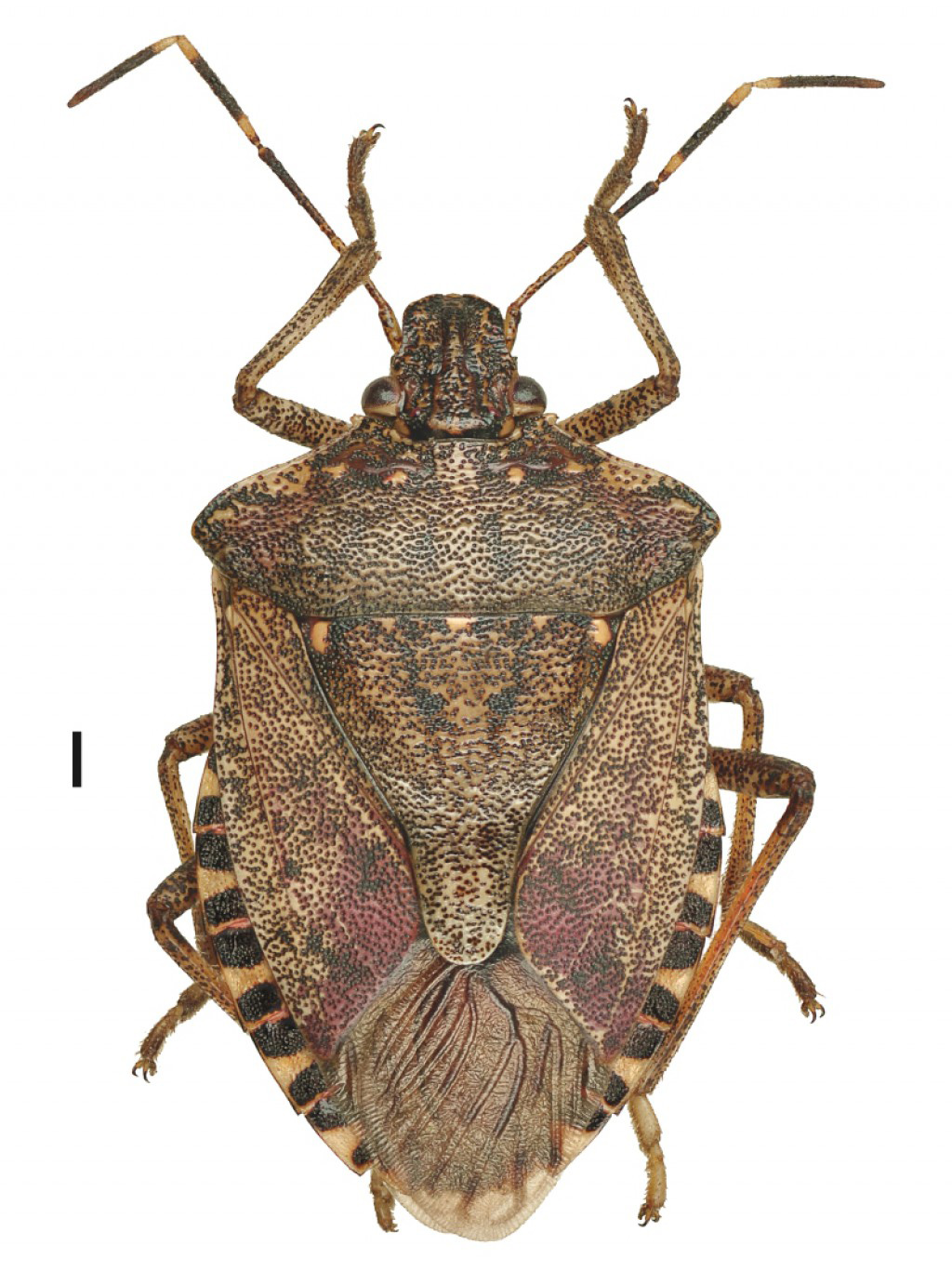
Brown marmorated stink bug, Halyomorpha halys
The BMSB is considered one of the most damaging horticultural pests globally. If it establishes here, it could reduce fruit yields by up to 25 percent, affecting high-value crops such as kiwifruit, apples, grapes, and a wide range of ornamentals and horticultural plants.
While BMSB are hitchhikers, often intercepted over summer in imported cargo or travellers’ luggage, one was recently caught in a surveillance trap in Orakei, Auckland – the first detection in an industry-led trap. The trap was located at one of 20 new sites added to the kiwifruit surveillance programme led by Kiwifruit Vine Health (KVH), based on research funded by Zespri Innovation and recommendations from the Bioeconomy Science Institute.
Bioeconomy Science Institute’s Dr Beccy Ganley, Director for Better Border Biosecurity (B3), says the early detection highlights the critical role of science informed biosecurity.
“We’re proud to contribute to research that helps detect high-risk pests early, before they spread. BMSB is one of the most significant biosecurity threats to Aotearoa New Zealand’s horticultural sector, and science informed surveillance helps ensure we find any arrivals quickly and respond effectively.”
Research by the Bioeconomy Science Institute has helped inform several improvements to New Zealand’s BMSB readiness. This includes developing more efficient traps, safer effective fumigation methods, improving treatment techniques for high-risk cargo entering New Zealand and establishing preapproval of a biocontrol agent (the samurai wasp, Trissolcus japonicus) in the event of a BMSB incursion.
KVH Chief Executive Leanne Stewart says the recent detection reinforces just how valuable science is to New Zealand’s biosecurity system.
“Science plays a vital role in shaping where and how we conduct surveillance. The insights, provided by the Bioeconomy Science Institute and funded by Zespri Innovation, helped our industry identify new high-risk locations and expand our surveillance network. This early detection shows just how important that work is – it gives us the best possible chance of stopping BMSB before it becomes a problem for growers and the wider industry.”
Stewart says protecting Aotearoa from harmful pests is a team effort.
“Strong science, strong partnerships, and strong surveillance are all essential in keeping BMSB out.”
The finding has been followed up by Biosecurity New Zealand, a branch of the Ministry for Primary Industries (MPI), and no further BMSB have been detected in the area. Extra traps are now in place near the detection site and will be monitored for several weeks.
Growers are encouraged to remain vigilant and report any suspicious insects to Biosecurity New Zealand. The high-risk period for BMSB runs from September to April.
Media contact
Bioeconomy Science Institute – AgResearch Group
Greg Ford – External Communications Manager
+64 (021) 832 351
greg.ford@agresearch.co.nz
Media contact
If you’re a journalist interested in this news, please contact a member of the communications team:
Greg Ford, Principal Communications Advisor
Email: greg.ford@agresearch.co.nz
Mobile: +64 (0)21 832 351
Justine McLeary, Senior Communications Advisor
Email: justine.mcleary@scionresearch.com
Mobile: +64 (0)27 241 5649
Maja Burry, Senior Communications Advisor
Email: maja.burry@plantandfood.co.nz
Mobile: +64 (0)27 437 5408