
Wednesday, 18 February 2026
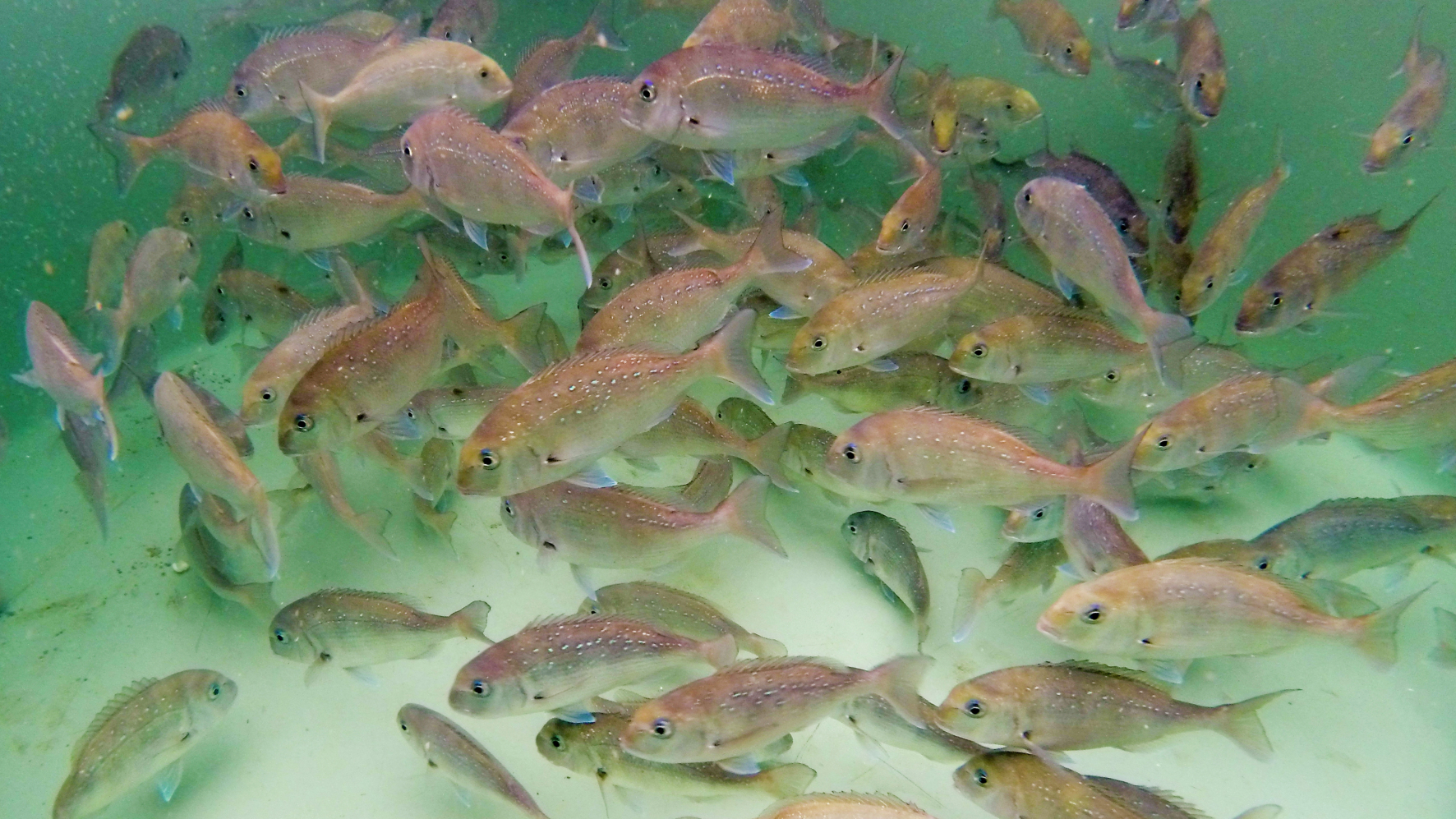
New research by scientists at the Bioeconomy Science Institute Maiangi Taiao and published in the New Zealand Journal of Marine and Freshwater Research, has showed that selectively bred Australasian snapper (Chrysophrys auratus) performed better in farmed environments than wild-caught snapper.
The study compared fourth generation snapper, bred by selecting parents in each generation with characteristics deemed beneficial for farming environments, with wild snapper, raised in sea pens in the Marlborough Sounds and land-based tanks over a two-year period. The selectively bred fish exhibited faster growth, with body lengths increasing by 1.7% in land-based systems and 4.8% in sea pens, and body weights improving by 9.8% and 14.2%, respectively. Survival rates were also substantially higher, increasing by 84.2% in land-based systems and 60.8% in sea pens.
“Traditional finfish farming will face increasing challenges as sea temperatures rise,” says Dr Maren Wellenreuther, who led the research. “New Zealand’s finfish aquaculture sector currently relies on salmon, which are known to be sensitive to temperature change. By finding new species to grow in aquaculture settings, the seafood sector can not only expand its offering to consumers but also develop resilience to changes in the climate.”
This is the first study of its kind in New Zealand, showing that sea-pen farming is a highly feasible production system for snapper. As a warm-water species, snapper grow well under local conditions and display strong survival and performance traits—even in regions increasingly affected by marine heatwaves.
“These results demonstrate that selective breeding can produce snapper that are not only faster-growing but also more resilient to environmental stressors, offering a climate-adapted solution for aquaculture,” said Georgia Samuels, first author on the research publication. “Our findings show that snapper could play a key role in future-proofing aquaculture in Aotearoa New Zealand.”
Snapper is a bream closely related to red sea bream in Japan and gilthead sea bream in the Mediterranean, both of which are among the most successfully cultured species in their regions, highlighting the biological and market feasibility for snapper to become the next major bream species for aquaculture in New Zealand.
The study underscores the importance of further research into warm-water species like snapper, which could safeguard seafood production in a changing climate. With continued selective breeding and refinement of farming techniques, snapper farming has the potential to become a cornerstone of sustainable aquaculture. These findings also offer valuable insights for aquaculture sectors worldwide seeking species that are robust to warming and variable marine conditions.
Samuels, G., Ashton, D., Ford, S., Fantham, J., Blommaert, J., Moran, D., & Wellenreuther, M. (2025). Selective breeding and production strategies to support snapper farming in the warming waters of New Zealand’s South Island. New Zealand Journal of Marine and Freshwater Research. https://doi.org/10.1002/nzm2.70011
Media contact
Emma Timewell
Communications Manager
+64 (0)21 242 9365
emma.timewell@plantandfood.co.nz
Media contact
If you’re a journalist interested in this news, please contact a member of the communications team:
Greg Ford, Principal Communications Advisor
Email: greg.ford@agresearch.co.nz
Mobile: +64 (0)21 832 351
Justine McLeary, Senior Communications Advisor
Email: justine.mcleary@scionresearch.com
Mobile: +64 (0)27 241 5649
Maja Burry, Senior Communications Advisor
Email: maja.burry@plantandfood.co.nz
Mobile: +64 (0)27 437 5408