
Wednesday, 17 June 2026
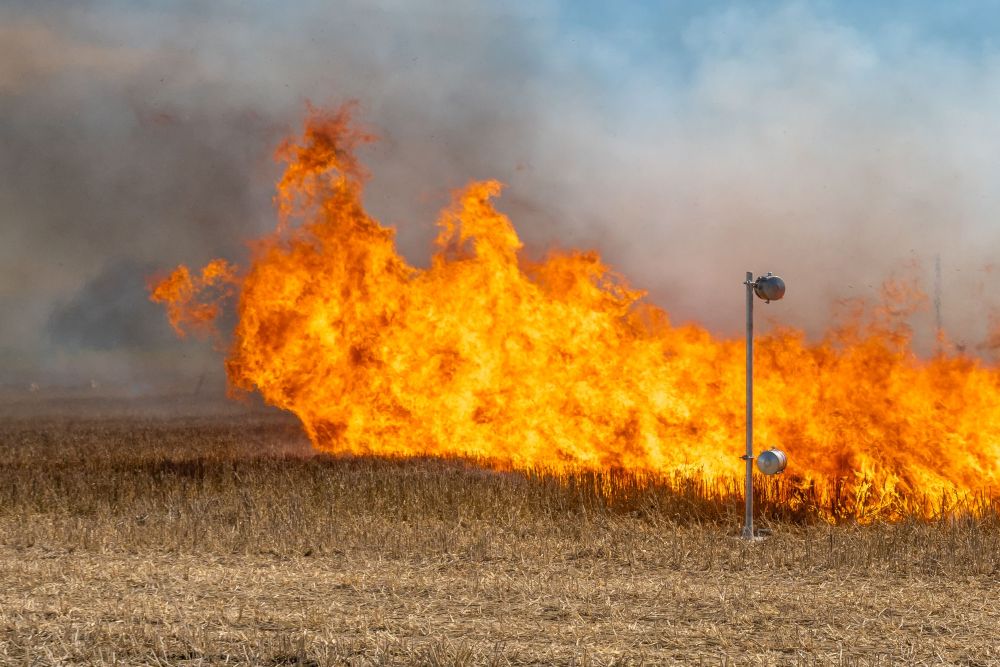
The institute has developed national-scale wildfire hazard potential data layers to help communities, businesses and wildfire managers better understand the areas that are more likely to burn under high-risk conditions, and how severe fire behaviour is likely to be.
The data was developed by simulating more than 500,000 potential ignitions and wildfire growth around New Zealand. Fire scientist Laura Kiely, who led the work, says the team modelled potential fires under set conditions – not actual fires that have happened. “We’re not saying this is the number of fires that will happen at any time. Rather, we’re considering if we have an ignition occurring, then what happens? What does that look like? Combining data from a high number of simulations allows us to consider the potential fire behaviour and the probability of it occurring.”
The data combines information about likely ignition drivers, fuel and weather conditions and potential fire behaviour to provide a consistent, documented baseline for planning, prevention, preparedness and risk communication. The team is designing these layers so they can be shared and reused in operational tools and scientific workflows.
“This will help identify what parts of New Zealand burn repeatedly under historical locally extreme weather conditions in our simulations and what parts have high- or low-intensity fires – to give an indication of what a wildfire could look like in a particular area if a fire were to occur there,” Laura says.
“This can enable safer wildfire management, resilience planning, better-prepared responses and more transparent conversations about mitigation. Knowing the potential hazard that could occur allows us to better prepare for a wildfire.”
Consistent hazard layers can help explain why defensible space, building design choices and protection of evacuation routes matter—supporting resilience.
The team is working with councils and risk analysis companies that have already expressed interest in using this data.
The data layers can be accessed here: Wildfire Hazard Potential Data WebExperience
Media contact
Bioeconomy Science Institue - Scion Group
Justine McLeary - Communications & Media Lead
+64 (022) 402 3526
justine.mcleary@scionresearch.com
Media contact
If you’re a journalist interested in this news, please contact a member of the communications team:
Greg Ford, Principal Communications Advisor
Email: greg.ford@agresearch.co.nz
Mobile: +64 (0)21 832 351
Justine McLeary, Senior Communications Advisor
Email: justine.mcleary@scionresearch.com
Mobile: +64 (0)27 241 5649
Maja Burry, Senior Communications Advisor
Email: maja.burry@plantandfood.co.nz
Mobile: +64 (0)27 437 5408