
Friday, 23 January 2026
In a changing climate, New Zealand farmers need pasture species that can handle heat and other stresses without compromising productivity. The Bioeconomy Science Institute is using genotyping by sequencing (GBS) to do exactly that: narrow the hunt for valuable, naturally occurring traits in white clover and perennial ryegrass, and move them quickly into lines that breeders can use.
Harnessing natural genetic diversity is becoming one of the most important tools we have for preparing New Zealand agriculture for a rapidly changing climate. For decades, large plant genetic resource collections have quietly safeguarded the raw material for future innovation, but the sheer scale of those collections has often made it difficult to uncover the traits that matter for farmers on the ground.
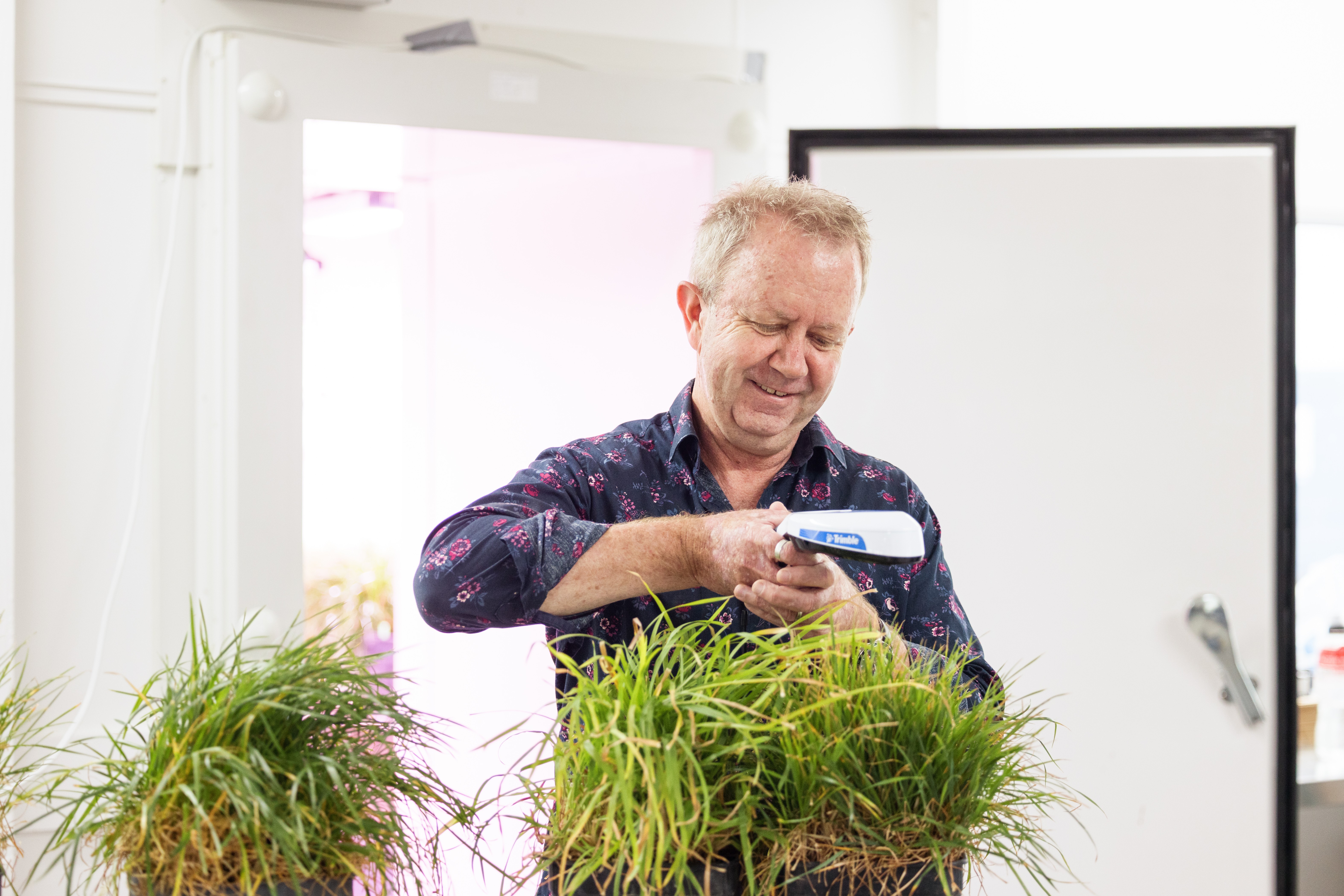
GBS is giving researchers the ability to scan thousands of wild and landrace accessions, map the genetic structure of globally diverse populations, and identify compact, highly representative core collections that make trait discovery faster, more efficient and far more targeted than was ever possible in the past.
The Bioeconomy Science Institute is now applying this capability through two major Flagship projects -Diversity of white clover and Diversity of perennial ryegrass - that aim to establish genuine pre‑breeding pipelines for our two most important temperate pasture species. The goal is clear: discover natural genetic variants with climate‑resilient traits and transfer them into locally adapted lines so commercial breeders can access new diversity that strengthens pasture performance for the decades ahead.
GBS is central to this because it enables us to structure vast collections into manageable sets that retain the majority of useful diversity. In both species, we have defined core collections of up to around 140 populations - small enough to screen meaningfully, yet representative enough to capture the evolutionary breadth present the thousands of original seed samples we hold in the Margot Forde Genebank.
In doing so, we have also gained a clearer picture of the unexplored potential within these species and the collection of national significance. GBS analyses so far have revealed that global white clover diversity falls into 12 major genetic groups, and perennial ryegrass into seven. Yet most current New Zealand cultivars in both species are essentially derived from just one of those groups: northwest Europe. This tells us that we are working with only a fraction of the diversity available, and that significant untapped variation could offer valuable traits, particularly those associated with tolerance to stresses our pasture systems are increasingly experiencing.
The first major trait we are targeting is heat tolerance. This is not because heat is the only emerging challenge, but because both species are naturally temperate and already show vulnerability to elevated temperatures. Prior studies suggest that tolerance differs across populations, indicating that natural selection in harsher environments has already produced variants better equipped to handle stressful conditions. Identifying those variants, validating their performance and building them into breeder‑ready material is the essence of pre‑breeding, and it’s work that requires both precision and patience.
We are now screening core‑collection accessions for their behaviour under sustained heat exposure. Six weeks at 38°C during the day and 30°C at night, temperatures roughly 15°C above the optimum for growth. Measuring biomass accumulation, leaf damage, survival and overall performance under these conditions allows us to pinpoint accessions that genuinely hold promise. By mid‑year, we expect to have completed about 40 percent of this intensive screening. In parallel, we are already creating the next generation of material by crossing selected core collection accessions with elite New Zealand cultivars. These “bridging” populations are a vital step in translation. They lay the groundwork for breeder‑ready lines and provide seed for field validation in summer‑hot environments.
This is long‑horizon science, but its value for New Zealand agriculture is immediate and lasting. As temperatures rise, rainfall patterns shift and extreme-weather events become more common, resilience in our core pasture species will be essential for maintaining productivity and giving farmers reliable options during transition. By pairing the vast genetic diversity held in our national collections with technologies like GBS and robust pre‑breeding pipelines, we are turning possibility into practical progress and helping ensure that New Zealand’s pastoral systems remain strong, adaptable and competitive in a changing world.
Media contact
Bioeconomy Science Institute - AgResearch Group
Greg Ford - External Communications Manager
+64 (021) 832351
Media contact
If you’re a journalist interested in this news, please contact a member of the communications team:
Greg Ford, Principal Communications Advisor
Email: greg.ford@agresearch.co.nz
Mobile: +64 (0)21 832 351
Justine McLeary, Senior Communications Advisor
Email: justine.mcleary@scionresearch.com
Mobile: +64 (0)27 241 5649
Maja Burry, Senior Communications Advisor
Email: maja.burry@plantandfood.co.nz
Mobile: +64 (0)27 437 5408