
Monday, 16 March 2026
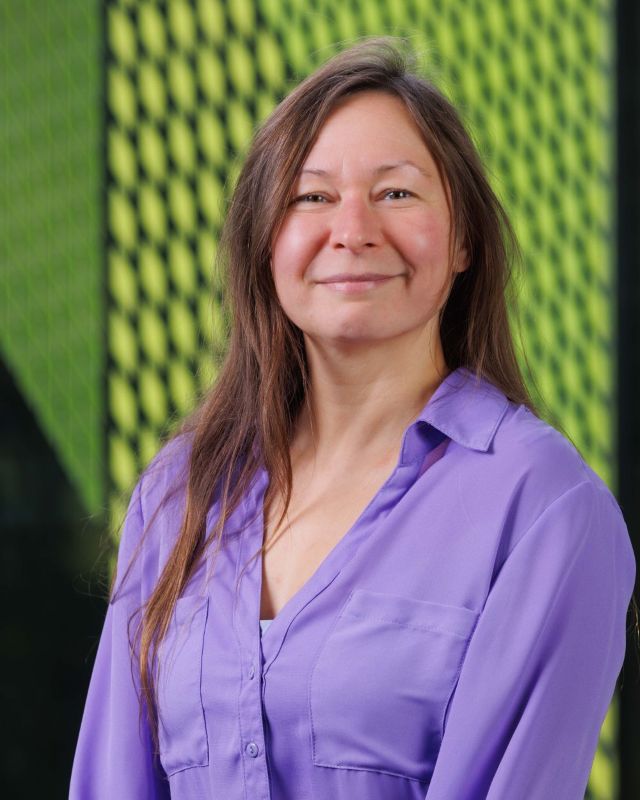
As a data scientist and research group leader for the Bioeconomy Science Institute’s Data and Geospatial Intelligence Group, Elizaveta (commonly known as Leeza) works across virtual reality, simulation and AI. “I work at the intersection of people, data and emerging technology, helping turn complex ideas into practical, real-world tools,” she says.
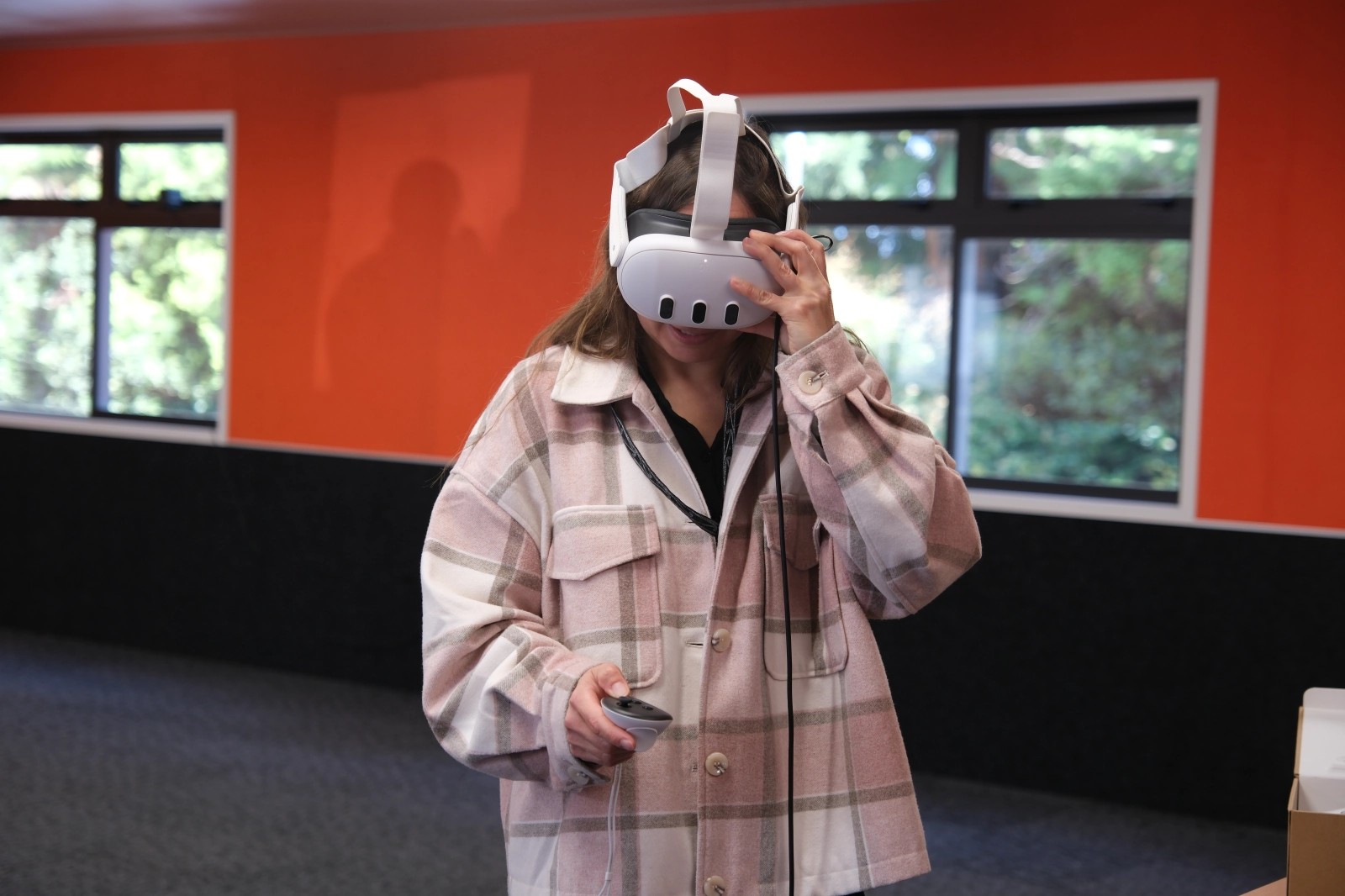
A major focus of her technical work is synthetic data — created in virtual environments that mirror real conditions as closely as possible. This data can be used to train people and robots and simulate environments that would be hard, expensive or unsafe to recreate in real life. For example, Leeza and her team have developed tools that support on-site forestry worker training and can be used to refresh experienced workers’ skills and help forest owners plan management strategies.
Visual tools, she says, help people understand complex ideas. “Synthetic data is a powerful tool for researchers and communication. People are visual and connect much more quickly when they can see something rather than just read about it. If you want stakeholders to really understand something, it helps to show them.”
More recently, Leeza has also been contributing to synthetic cloth simulation, which she says is a developing area with exciting potential for robot training.
Work life
As a research group leader, Leeza oversees a team of about 20 researchers and specialists. She spends a lot of time supporting their wellbeing, development and day‑to‑day work. She originally applied for a data scientist role five years ago but was offered the opportunity to lead a team of 10 because the current manager was leaving. She’s always liked taking responsibility and leading people and she was keen to try it formally.
It’s been a learning journey for her. “You don’t suddenly become a leader and know everything. You grow into it,” she says. “I’ve done a lot of reading about what makes a good leader, but it’s not about having all the answers. It’s about trusting yourself and your team and being willing to learn alongside them.”
Good ideas, she believes, come from strong teams. “Leadership is not just about technical achievement. It’s about people — watching them grow, seeing ideas come to life and creating environments where learning feels possible and empowering.”
Background
Originally from Moscow, Leeza moved to New Zealand seven years ago. She’d fallen in love with the country during an earlier three-week trip, drawn to its space, nature and balance.
“After my son was born, it felt like the right time for a big life change,” she says. “You really can live many lives within one life.”
Moving to NZ gave Leeza a chance to retrain. She worked part-time in finance while completing a Masters in spaceship engineering (automation and control) and stayed in the role full-time after graduating. Twelve years later she was ready for a new challenge. She grew up listening to stories of exploration and early computing technology – one of her grandfathers was a marine biologist who sailed with Jacques Cousteau, the other a computer scientist who led the development of early operating systems for machines that filled entire rooms – and she was drawn back to maths and programming.
Data science was an emerging area, so Leeza went to Canterbury University to do a post-graduate degree in the field. After finishing her studies she taught applied data science for 18 months and then spent some time in Auckland before settling in Rotorua.
“Rotorua offered the chance to stop and settle down,” she says. “It’s peaceful, green, surrounded by forests and lakes. I live near Lake Ōkāreka, and it feels like a place where I belong.”
Outside work
When she’s not working, Leeza’s drawn to water activities. She’s been swimming for nearly two decades – she loves the mental clarity the sport brings, especially in winter – and occasionally competes in open water events. “I love ocean swimming, the lakes, and even cold-water swimming in winter,” she says. “It’s as much about mental health as fitness.”
She also coaches other adults in swimming.
Other activities are driven by her son, 10. “I tend to adopt hobbies he enjoys, so we sail, play tennis and try new things together,” Leeza says. “I also enjoy gardening and painting. I’m very curious and enjoy learning new skills — it keeps life diverse.”
That curiosity is at the heart of the advice she gives young people considering science or technology careers. “Explore, have fun and don’t be afraid to try things. Working in research means living with uncertainty. Projects don’t always go to plan, and outcomes aren’t guaranteed, but that’s also what makes the work rewarding.
“Trusting yourself, trusting your team and staying curious are key. Science gives you freedom to create.”
Media contact
If you’re a journalist interested in this news, please contact a member of the communications team:
Greg Ford, Principal Communications Advisor
Email: greg.ford@agresearch.co.nz
Mobile: +64 (0)21 832 351
Justine McLeary, Senior Communications Advisor
Email: justine.mcleary@scionresearch.com
Mobile: +64 (0)27 241 5649
Maja Burry, Senior Communications Advisor
Email: maja.burry@plantandfood.co.nz
Mobile: +64 (0)27 437 5408