
Monday, 15 December 2025
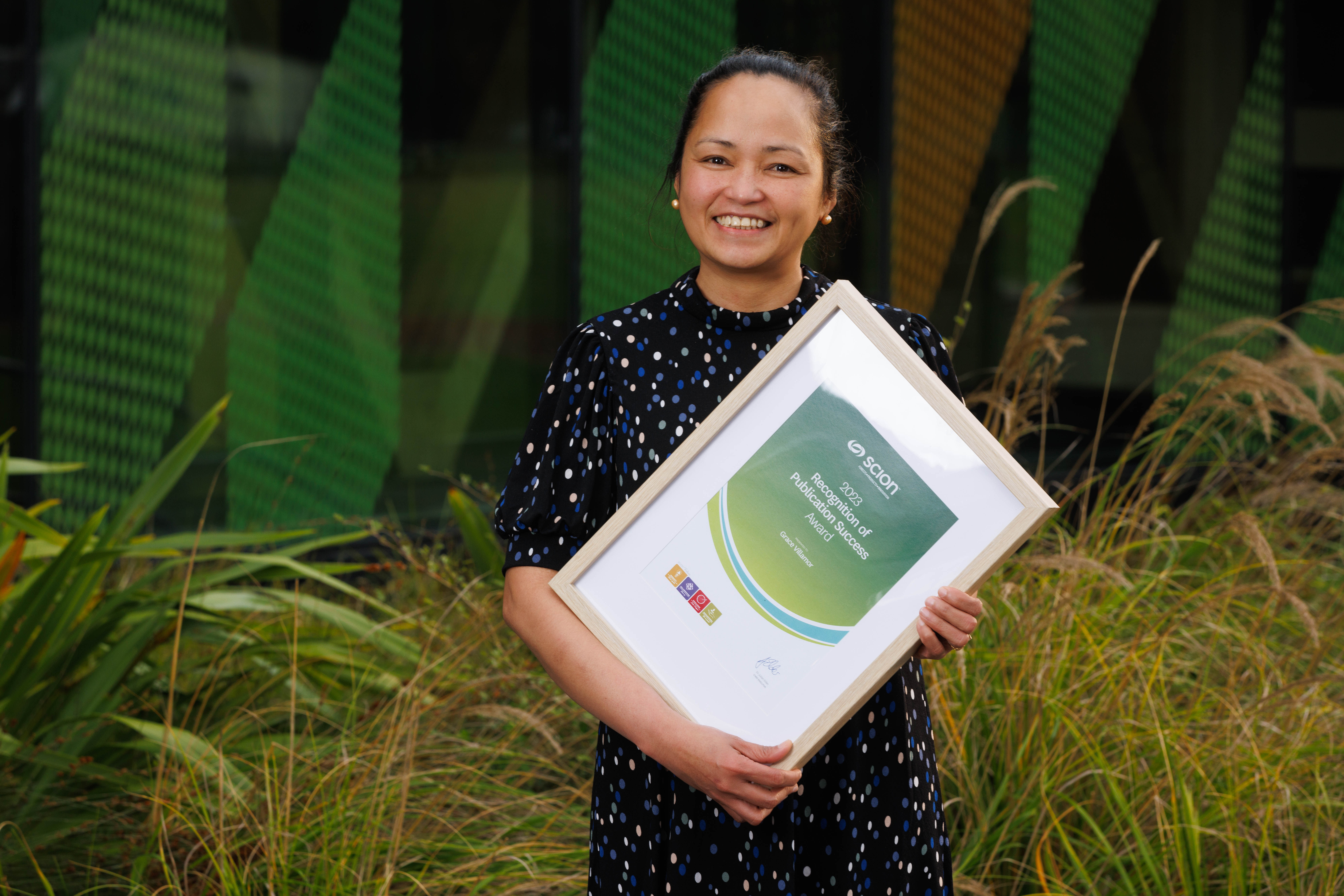
This experience has seen her secure a prominent position as a lead author for the Intergovernmental Panel on Climate Change (IPCC)’s Seventh Assessment Report – a role she describes as a career-defining moment. “To be invited to contribute to such a globally significant report is humbling and thrilling,” she says. “It marks a major milestone in my career and validates years of dedication to climate science. To be recognised as a leading voice in this space, helping shape the scientific foundation of global climate policy, is beyond exciting.”
Grace will be a lead author in a working group focused on climate impacts, adaptation and vulnerability. Her involvement in the report highlights the Bioeconomy Science Institute’s growing impact in shaping climate science and policy on a global scale.
“This isn’t just about my own work,” she says. “It reflects the high calibre of research we’re doing at the Bioeconomy Science Institute. Our expertise in forest ecosystems, bioeconomy and climate resilience is being brought into one of the most important scientific conversations of our time. This is a powerful opportunity to ensure New Zealand’s ecosystems, challenges and innovations are represented in the global climate narrative.”
Background
Grace came to work at Scion – before it became part of the Bioeconomy Science Institute – in 2019. Formerly a research group leader, she opted to step back from that as she missed the action. “I like being hands-on,” she says.
Now she leads three key projects: Resilient Forests, Bioenergy (socioeconomics) and the decision-support tools of Forest Flows, all focused on understanding risk, behaviour and decision-making in a changing world. “With Resilient Forests, for example, the focus is on managing risk and the uncertainty of plantations, the forestry company or the industry,” Grace says.
Before coming to Rotorua, she lived and worked in several countries. Originally from the Philippines, she completed an honours degree in forestry in her native Philippines before going to Germany for a Masters in tropical forestry and management (specialising in forest economics) and a PhD (honours) in human geography. This PhD incorporated biodiversity, carbon and rural livelihood research in Indonesia. When that was finished, Grace’s supervisor told her she needed a new challenge and suggested West Africa. “He wanted me to experience many things as possible,” she says.
So she headed there for what would be a seven-year stint, working on climate adaptation and land-use change programmes in Ghana, Burkina Faso, Nigeria, Togo and Senegal. It was, she says, an amazing experience. “I went there without expectations so I was continuously surprised, and I love that. The people are also so nice.”
Grace then went to Idaho to focus on sustainable dairy systems – looking at biodiversity, water, carbon and climate change on cattle farms with stock in the thousands – and how to utilise waste and make it sustainable. She stayed there for two years before coming to Rotorua.
Life outside work
Grace loves it here and says settling in was easy because Rotorua ‘mimics’ her hometown in the Philippines. She lived in Los Baños – which means ‘the baths’ in English – in the foothills of Mt Makiling, where there are a lot of hot springs. “I'm familiar with the smell,” she laughs.
When she’s not working, Grace finds plenty of time to smell the flowers, too. She grows orchids she refers to as her babies and enjoys spending time with them. “In the morning, I immediately check on them and water. Orchids can give you wonderful flowers and fragrance.”
It all started when Grace attended an orchid show. She started buying and then growing, joined the NZ Orchid Society and now has about 70 in her greenhouse. “When there are blooms, I put some in my house so it's nice and fragrant. I always have flowers.”
She also loves cooking. “I like to check different restaurants. When I see something nice, I'll mimic it. Right now I’m into Vietnamese food – pho and fresh spring rolls. But that keeps changing. My palate often wants something different. So sometimes Mediterranean. I love to eat.”
Grace enjoys being a tour guide for her Filipino relatives, who visit often. She also has many Filipino friends, and they love eating and singing karaoke together. They gather together on weekend evenings to cook and share meals.
“I feel at home here.”
Climate adaptation
In 2007 Grace attended a training workshop in Paris where various professors and climate change scientists outlined the increasing urgency to address climate change. That, she says, was a turning point for her. “It showed me we were in a critical situation. That made me decide to focus on climate change. But looking at the human dimension and how people behave, because we’re slow in making decisions.”
For Grace, climate change is a big-picture issue centred around human behaviour. Many New Zealanders, she says, are yet to recognise the need to adapt to climate change, particularly when compared to those in other countries already experiencing major impacts.
“I find NZ is only focusing on the mitigation side, such as planting trees,” she says. “But those who are really experiencing the hardship of impact of climate change are the ones learning to adapt. That's what I'm seeing in other countries. In the Philippines, for example, we have 13 typhoons a year or more, and lots of flooding. These things tell me we need to adapt. There are people who don’t believe in climate change, but we need to prepare now, because climate change impact is happening now whether you believe in it or not.”
The year ahead
Grace is focusing on a new research approach – a foresight strategy to help people prepare for the future. “We look at the big megatrends, such as climate change, that will impact NZ forestry,” she says.
“I'm looking at geopolitics, demographic change along with climate change, and what will happen in the next 30 years. We’ve developed a workshop, funded by Forest Growers Research, where young foresters are creating their vision using foresight tools. We hope this will give us a framework for navigating future challenges.”
This work, and being able to publish high-impact journal papers looking at climate in a global context, is Grace’s dream. “I love finding ways to prepare for the future,” she says.
Media contact
If you’re a journalist interested in this news, please contact a member of the communications team:
Greg Ford, Principal Communications Advisor
Email: greg.ford@agresearch.co.nz
Mobile: +64 (0)21 832 351
Justine McLeary, Senior Communications Advisor
Email: justine.mcleary@scionresearch.com
Mobile: +64 (0)27 241 5649
Maja Burry, Senior Communications Advisor
Email: maja.burry@plantandfood.co.nz
Mobile: +64 (0)27 437 5408