
For more than 20 years, scientists have worked on ways to protect New Zealand from wilding conifers – unwanted trees such as Pinus contorta (lodgepole, shore, twisted and contorta pine) that spread through self-seeding and are one of our most serious environmental challenges.
Wildings invade high‑country landscapes, grasslands and alpine ecosystems and rare mineral and geothermal grounds. They crowd out native vegetation, dry out soils and waterways, reduce biodiversity, increase fire risk and make land harder to manage. Infestations can also host mammalian pests such as goats, pigs, deer, rats and possums, with wilding control operations costing millions of dollars annually.
Before 2016, wildings were spreading over an estimated 90,000 hectares each year.
Science has focused on how these trees spread, how best to control them and how to stop treated land being reinvaded. Researchers now have a better understanding of the causes and consequences of wilding invasion, of how landscapes can be made more resistant after control and of how communities experience and respond to the problem.
Practices to prevent reinvasion are being co-developed alongside iwi, government and industry partners. Developments in improved control methods, innovations and approaches are supported and tested through the National Wilding Conifer Control Programme.
Together, these insights support smarter prioritisation of control efforts and long‑term regional and national decision‑making. By integrating forestry science, ecology and land‑use knowledge, we can better protect landscapes, safeguard productive land, reduce long-term management costs and deliver lasting benefits for communities and future generations.
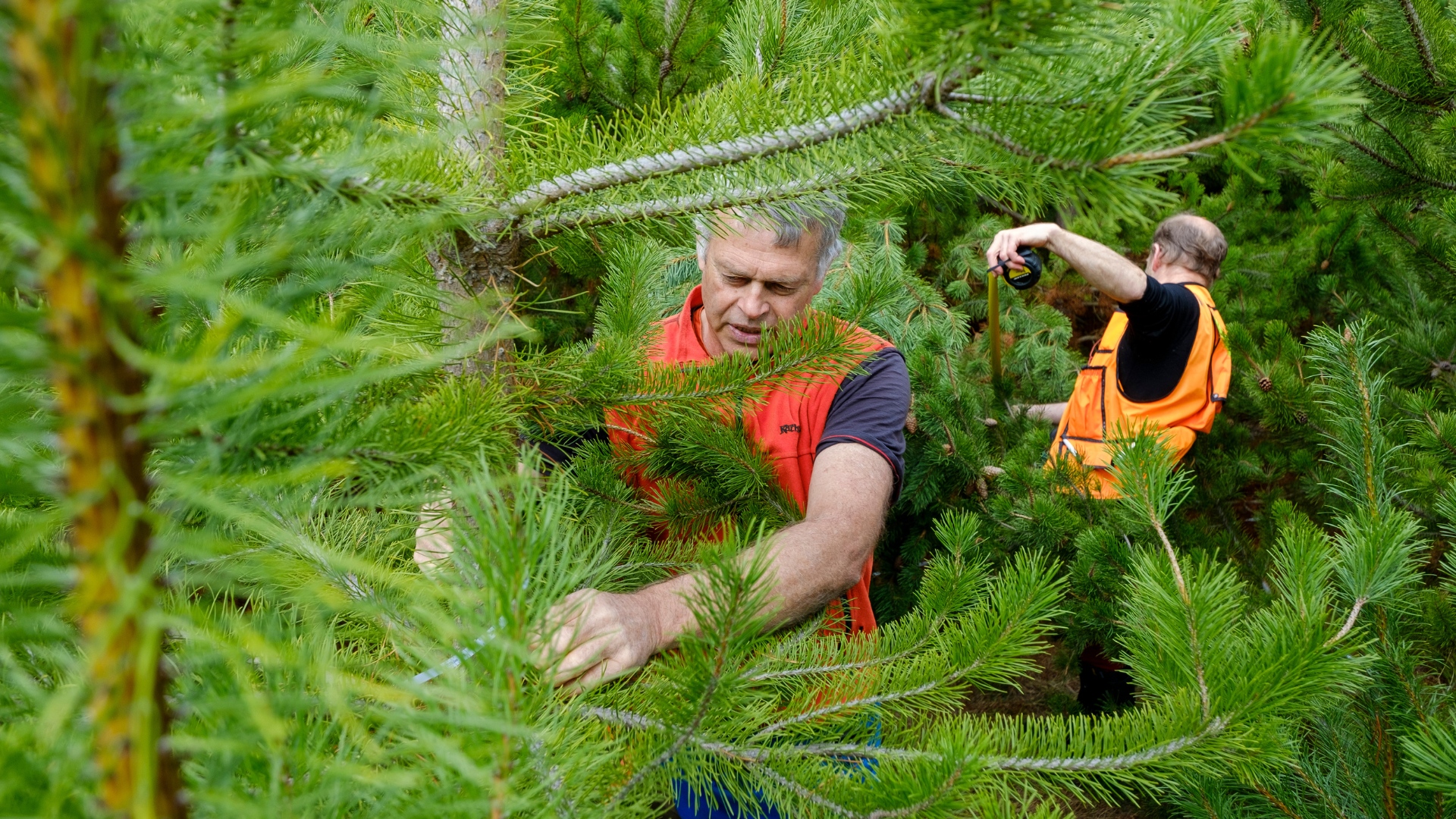
Measuring wilding pines at Molesworth Station near Hanmer.